Mother to Katira, the main character in Stonebearer’s Betrayal, and companion to Jarand, Mirelle is both a nurturer and councilor. In sticky situations, she is the one most likely to stay rational and calm and keep the other characters from making rash decisions. This works well because both Katira and Jarand both tend to let their emotions guide their actions.
“Healing Silverstars” By AnthonyFoti
From her youth, Mirelle has been passionate about the healers art. It came as no surprise that when her powers manifested, her strength and talent aligned with this passion leading her to join the Order of Healers. She is unique among healers with the power, as she also has gathered a wealth of information regarding medicinal herbs. This knowledge is put to good use in the small town of Namragan, where she lives with Jarand and Katira and works as the town’s healer.
Among her peers, Mirelle is considered one of the best Stonebearer healers, second to Master Firen the head of the healing arts at Amul Dun, the mountain fortress of the Stonebearers.
Katira grew up watching her mother work healing the sick, tending to the wounded, and preparing salves, tinctures, and other medicines, all with an expert hand. Katira admired her mother so much in this ability to make people feel better that she begged to learn the healing art as well. As soon as she could lift the heavy mortar and pestle she pulled up a chair and worked alongside her mother. When Katira was old enough to announce her trade as a young teen, she proudly declared she would follow in her mother’s footsteps.
People are like books, containing journeys, adventures, and hidden turns. Today’s post is about the journey of a young entrepreneur working to make the world of reading a little bit brighter.
Rae was kind enough to help me with my book launch last year and I finally got around to thanking her formally and letting her share her voice here on my blog. Go check out the awesome post she did for me on her website.
Within the Pages
by Rae
I could start off from the very beginning of my book
journey with my grandma’s reading challenge the summer before high school. I
could continue with my plunge into writing and fanfiction and the overwhelming
consuming of the #feels that come with author admiration, character boyfriends,
and more. From there I can spin my web of story telling to encompass my writing
journey at college and all that I did there – successes and mishaps. Following
college my writing took a nose dive into a pill of forgotten story ideas while
my blog burped under my relentless pursuit of being a book blogger and becoming
a part of a community I admired and feared. And yet, where am I now?
You see, everything that has happened has shaped me into
who I am today – a freelance editor with a young business, a reader buried
under her TBR list, and a writer struggling to type a sentence while ignoring
the imposter that whispers in both ears. Let’s not even go into the MFA rant
because believe me…it’s complicated.
From a book challenge till now as I type this, has
been intense, scary, beautiful, heartbreaking, and ironic. I tried so long to
ignore my voice, ignore the stories…and still books brought me home.
Now it might sound corny, but bear with me here. As a
reader we all have at least one book that sticks with us. You know exactly what
I mean. That book that haunts you from the shelf, that sneaks into your dreams
or daydreams, that influences an action when you find yourself floundering to
react in a situation. Then of course there are the book boyfriends and idols we
all want to be but can’t figure out how to find them within ourselves or others.
But I digress here.
Each one of my roles – editor, reader, writer – all
lead me back to the story, the words on the page that entice me to tears,
provoke me into a rage, that shield me from reality when life gets too
unbearable. I look for the book that doesn’t let me go, that I suffer through a
book hangover for days trying to pick up the pieces and connect the what if
this or that had happened. I look for the book that glares at me from my shelf
and I glare back because how did it get so far under my skin? I need the happy
ending. I need the realistic ending. I need the ending where it is such a cliff
hanger that I want to hook up a bungee cord and make the leap because I know
the story has got to be continuing.
As an editor I want to help that story grow and be
ready to face the world.
As a reader I want my reviews to shower reflection and
insight.
As a writer I want my story to leave an impact of some
kind.
Will it be pretty? No. Will it be perfect and loved by
all? Nope.
But that is the beauty of it. Writing is messy. Books are messy. Being a fangirl, reviewer, bookstagrammer, editor, and so on is messy. Take the good and the bad and go with it. That next book is waiting for you. Go find it or go better yet – write it.
About today’s guest –
Rae is a writing and reading instructor at an elementary school by day, freelance editor by night, and fangirl at every other available opportunity. She always knew books were her passion, well after her grandmother’s challenge to read a book a day, and obtained her B.A. in English with a concentration in Creative Writing from Arcadia University. Currently, she’s drowning in her TBR list, deciding on whether or not to go for her MFA, outlining her would be novel, and expanding her freelancing business while looking for more bookish things to get involved with. She is active on Twitter, Instagram, and sometimes Facebook when she remembers.
A New Look On Books is a professional freelance editing service that aims to get manuscripts ready for querying and publication.
A testimonial about her services –
“Rae’s sample edit exceeded my expectations. To say that her instincts were spot-on is an understatement. She immediately “got” my characters, had a sense of where I was going, and offered suggestions that immediately tightened up my manuscript. If you’re searching for a qualified and passionate editor who will challenge you to make your book better, look no further.”
— R. Bazylak @bazlactica
***
Thanks for joining us today! If you’d like to be notified of future posts, be sure to ‘subscribe’ using the handy links.
You can also find updates and post notifications on Facebook, Twitter, and Instagram – chose the one you like the most!
Posting a full review here feels way too much like tooting my own horn, but today’s review is special. Last Friday, my oldest son job shadowed me as I went about my day as an author. He learned about free writing, work/life balance, drafting, and marketing.
Watching an author work is awkward for the author and boring for the watcher. The best way to experience what any job is like is to try it. And … since he is my perfect target audience and has already read my book, teaching him how to write a book review was the ideal exercise to learn how to draft out a new project. Even better, he’s thrilled to have his work published here on the blog.
Here’s his review of my book, which is it’s own special kind of adorable.
Stonebearer’s Betrayal Book Review
by Timothy Milner
Stonebearers Betrayal is a fantasy book about a girl named Katira and her friends who get wrapped up in this adventure featuring magic, demons, travel stones, magic stones, an alternate reality, and a creepy old guy who kidnaps her for a couple days. Not as creepy as it sounds, just a bit creepy.
Though there’s a bit of bias in this statement, I love this book. The sense of adventure and danger really puts this book in a special category, so much so that some would call it a “underrated masterpiece.” Stonebearer’s Betrayal does a magnificent job at conveying emotions. It makes you feel like they’re going to die or feel like she’ll never escape.
I’m not sure about what I don’t like about this book, other than the fact that some of the concepts are a bit creepy. Although I didn’t really like the creepiness factor, I’m sure that others would. It makes the main villain feel even more powerful and demonic.
In stories, it’s usually very important to make the villain feel powerful, make it look like the odds for success are low. You don’t want a story with a wimpy villain, right? If the villain is easily defeated and the heroes go home to celebrate, then there isn’t much story to begin with, especially at the climax. And this is what Stonebearer’s Betrayal does very well.
I’d rate it for people 13+, because anyone below that won’t really understand or respect it. I’m not sure what it’s similar to, I want to say it’s a bit similar to Eragon by Christopher Paolini, but I’m not sure.
About today’s reviewer –
Timothy Milner is a 13-year-old who is way too mature for his age, but nonetheless, he likes to nuke things from orbit, design TNT machine guns, and die to the goddamn triple spike at 53%. Did he mention he was a gamer?
Do you like dragons? Good news! I’m working on several dragon projects at the moment. Two of these are short stories that will appear in anthologies and one is a middle grade novel that I’m co-writing with friend and fellow Immortal Works author, Daniel Swenson.
Written as part research, and part fun, check out my article “Symbology of Dragons” I wrote for Amy Beatty about the significance of dragons in different cultures around the world.
***
Thanks for joining us today! If you’d like to be notified of future posts, be sure to ‘subscribe’ using the handy links.
You can also find updates and post notifications on Facebook, Twitter, and Instagram – chose the one you like the most!
Probably one of the most frustrating thing I hear about fantasy authors is the belief that we make everything up. We come up with a world, stick people in it, add a touch of magic, and voila! Fantasy story. The end.
The truth is, we actually do a fair amount of research. Precise details can bring a sense of realism to our fantastical worlds and often we take vital cues from already existing cultures and beliefs.
Today, Amy Beatty wants to discuss just that – the importance of research in all writing, including fantasy.
All fiction is a shared daydream. Whether a story’s setting
is modern day Chicago, Paris during the Second World War, Edo period Japan, or
a long time ago in a galaxy far, far away, the writer invites readers to enter
a world that is different in some ways from their own—a mentally constructed
virtual reality.
And the number one rule for the fiction writer is:
Don’t break the daydream.
Imagine signing up for a much-needed vacation to an exotic retreat, where you’re sure to meet fascinating new people and participate in thrilling adventures. You buy the ticket, board the plane, and make friends with the person in the seat next to you. With a roar of engines and a stomach-clenching lurch, the plane takes off, climbing into the sky. A flight attendant wheels her cart of goodies down the aisle in your direction. Delicious smells fill the cabin—it’s not just peanuts this time! Your mouth waters in anticipation.
Abruptly, everything erupts in a flash of static and disappears.
“Sorry,” says some broom-wielding dude in the corner. “I tripped over the cord. Also, your mother-in-law is coming over, and your kid is wearing your underwear on his head again.”
Boom. There you are, dumped straight back into your own reality without so much as a by-your-leave.
How rude!
That’s what it’s like when the author breaks the daydream
for a reader.
And that’s why good research is so important for writers—the
daydream is only fun when it’s convincing and immersive. Details make all the
difference. But a writer can only write
about what the writer knows about.
So, a mystery writer might study police procedure, a romance
writer might study relationship psychology, a writer of realistic historical
fiction might scour old almanacs for historic farming practices, and a fantasy
writer . . .
Wait. Fantasy writers don’t have to do research, do they?
They can just make everything up. It’s fantasy, after all; anything could happen.
But when something happens in a fantasy story that breaks
the established rules of its fantasy reality, it jolts the reader in the same
way as when a realistic story breaks the established rules of the real world.
As a result, researching for fantasy is, in some ways,
actually more complicated than researching for realistic fiction.
For realistic fiction, an author only needs to do enough
research to determine whether a specific technology (for example) really does
(or did historically) indeed exist in the time and place in which the story is
set. For fantasy, however, the writer must determine whether it’s plausible that the technology in
question could exist in the time and place of the story, given the context of everything else that has already been established about
the world of the story.
For example, some technologies can only be developed after the
technologies used to make their component parts have been invented. Are all the
necessary component technologies present in the world? Also, if a technology is
being utilized in one aspect of a society, it will almost certainly show up in
others. A civilization that uses steam-powered tanks to achieve world
domination will be more convincing if it also employs steam powered water pumps
and agricultural equipment.
One fantasy book I read used specific ethnic groups and
place-names to indicate that the setting was an alternate version of early
medieval Europe. Then, in the middle of the story, the characters casually sat
down to a dinner that included turkey and potatoes. For me, this broke the
daydream because both of these items originate in the New World, which would
not yet have been discovered at the time in which the story was set.
This could have been fixed in one of two ways. First, the
author could have mentioned in passing at some point before the meal that a new
land had been discovered across the sea (placing it earlier in the fictional
history than it occurred in real history). Alternately, and probably more
appropriately for this story, the author could have simply substituted similar
foods that would have been available in the time and place the author had
chosen, such as goose and turnips. But as it was, the discrepancy between the
established milieu and the items that didn’t fit that milieu was jarring, and
it took me a while to get back into the story.
By contrast, in another book, set in an alternate version of
modern-day London, a wizard and his apprentice toss a hand grenade into the
basement of a suburban home in order to eliminate vampires who have taken up
residence. The author’s careful description of the label on the grenade is a
potent detail that not only raises the tension and augments the sense of
immersion, but also helps convince the reader that if the author got the details
right on the hand grenades, he’s probably also right about the vampires.
An author who is striving for a realistic setting for a
story needs to make sure that what happens in the story conforms to the reality
with which the reader is familiar.
Likewise, an author who works toward a plausible fantasy
setting needs first to convey to the reader the parameters of the story’s
virtual reality, and then the author is under the same obligation to make the
story conform with that established reality.
In either case, a lot of research can be necessary. Because
the number one rule for the fiction writer is:
Don’t break the daydream.
The Marvelous Amy Beatty
About Amy
Beatty
Amy Beatty grew up in the wilds of Yellowstone National Park
as part of an experiment in crossing the genes of a respected research
biologist with those of a grammar aficionado. She spent her summers making
forts under the sagebrush with her friends and catching garter snakes by the
creek to populate elaborate sandbox villages—or holed up in her bunk bed
exploring the exotic worlds hidden between the covers of books.
She currently lives in Utah with her husband and their two
delightfully unconventional children. For fun, she likes to cut big pieces of
cloth into small pieces of cloth and then sew them together again. Several of
her quilt projects have been exhibited in juried shows at a local art museum.
Edrik, son of the murdered Drake regent, never gained his
dragon magic and cannot shapeshift into his dragon form. Unfit to marry his
love, the Princess Lissara, Edrik embarks on a dangerous mission to prove
himself worthy. He seeks Lissara’s missing father, the dragon king, before an
enemy usurps the throne.
Unfortunately, the search for the king brings Edrik to a
dungeon located in human territory. Inside the prison, Edrik discovers the
missing king, whose captors are unaware of his true identity. Edrik must rely
on a grubby young dungeon keeper to help them escape without disclosing that
his companion is the dragon king. But the dungeon keeper has a secret identity
as well, one that will change Edrik’s destiny forever.
Be sure to check out the Fantasy and Sci-fi Reader’s Lounge Feb 6-9th where dozens of YA authors will be sharing about their work and giving away books and prizes. Yours truly will be featured on Feb 7th from 11-12am EST (9-10am MST)
***
Thanks for joining us today! If you’d like to be notified of future posts, be sure to ‘subscribe’ using the handy links.
You can also find updates and post notifications on Facebook, Twitter, and Instagram – chose the one you like the most!
Maybe it’s true. Maybe we don’t know what we have until we’ve lost it. But, maybe it’s also true that we don’t know what we’re missing until we find it.
It’s a moment that isn’t soon forgotten. You are watching a show or a movie and suddenly you come face to face with – yourself.
Let me back up. I’ve loved movies, books, fantasy worlds, and escapes from reality since day one. These stolen golden moments when I could pretend I was someone else, put myself into a different pair of shoes, and experience a different perspective, painted my childhood.
The heroes in these stories were all wonderful – and they were all something I could never be. They were tall, I was short. They had lustrous dark hair, I had frizzy red hair. They were well liked, I … wasn’t. They tended to be boys, I’m most certainly not. They had sharp cheekbones and clear skin, I’ve got more freckles than some people have hair.
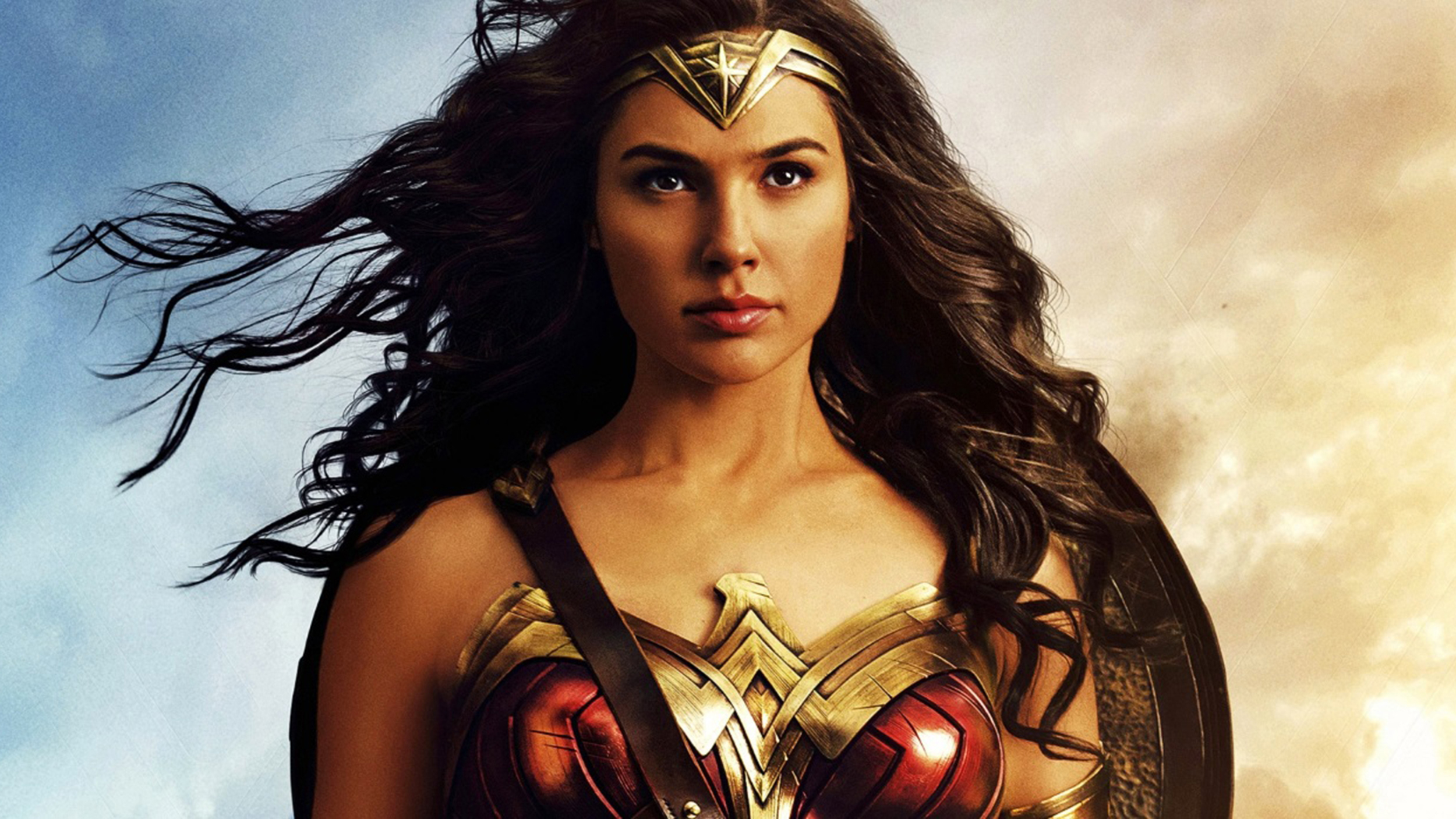
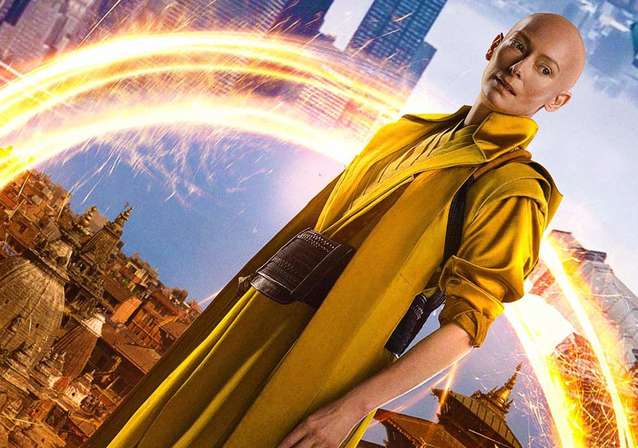
Finding a female role model in a great story is hard. Women are rarely the main character. When they do appear they often are reduced to furniture for the main character to use, think about, and rescue. When a strong female character does enter a story, she is almost always dark haired, long-limbed, with clear skin. Anything different is a notable exception, not the norm.
Gal Gadot as Wonder Woman
The most recent Wonder Woman captures the hearts of mothers and daughters around the world because she is strong and good and real. But she matches the formula: she’s dark haired, with long legs, and clear skin.
I loved Tilda Swinton as the Ancient One in Doctor Strange because she breaks the rules of what a strong female character should look like.
Tilda Swinton in Doctor Strange was completely amazing.
A few weeks ago, for the first time in my life, I finally had my moment where I too felt represented in fiction.
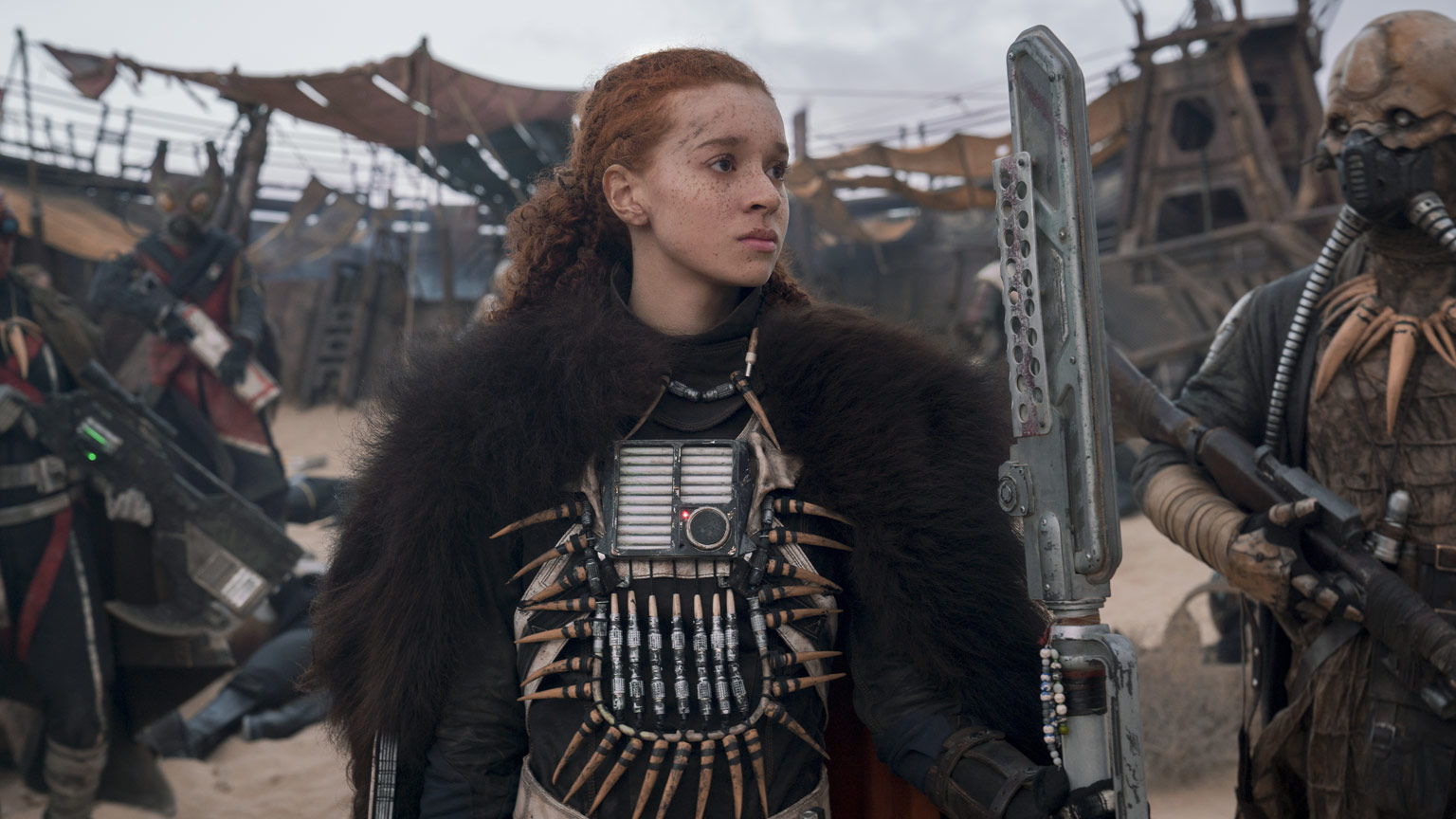
At the end of Solo: A Star Wars Story, the masked Enfys Nest does her big reveal. Throughout the movie we’ve been led to believe she is a man. She wears a large disguise and hides her voice. She is tactical, ruthless, efficient, and has made things hard for our hero – so we aren’t sure if we should like her.
The daunting and powerful Enfys Nest, played by Erin Kellyman
When the mask falls to the ground we see this stunning powerful woman with a mass of red curly hair and freckles.
And, ohmygosh ohmygosh ohmygosh, I finally get it. I had never encountered a powerful redhead in film until now. This is what representation means and why diversity is so important. Until recently entire populations of people have been excluded from being cast in powerful roles. This has got to change.
Until this moment I didn’t know what I was missing, because I had no idea there would ever be someone like me portrayed in film. Because of this moment, I intend to strive for greater diversity in future projects.
Everyone deserves a hero they can see themselves in.
All images are used here under Fair Use for discussion, review, and educational commentary. They belong to their respective copyright owners.
My buddy James and I did a super entertaining blog swap. He asked me to stretch out of my writing comfort zone and write a cyberpunk “how to” article. Here’s what I came up with. Be sure to like and follow James at his blog. 🙂
As part of a blog swap (see my last post), Jodi L. Milner wrote these fun instructions, which I think you’ll enjoy.
Assembling your Cyberpunk Heist Team
By Jodi L Milner
Listen, if you’re reading this you are already up to no good. Kudos. I like your moxi. Chances are you’ve got plans, big ones, the kind that needs cash. We’re not talking about rummaging up enough coins to sleep in a real bed, that’s nothing. If you take my advice, you’ll never have to sleep on a pile of cardboard again.
We’re talking credits. Those penthouse-dwelling corporate yes-men got ‘em. You need ‘em. The cybernetic enhancements you want won’t pay for themselves, and without ‘em you might as well start selling your brain space to the highest bidder.
To pull off a successful heist, you need a team.
The Mastermind – That’s you, sweetheart. Someone must know what’s really…
Every single one of us has that one friend who hates things with an unusual passion. You know the one – and if you don’t, it might be you. The conversation will start with a casual discussion about the most recent movies they’ve seen and the next thing you know, they are ranting about some aspect of the show that you frankly could care less about.
This is a toxic fan – and James Wymore isn’t one of them. Trust me. He’s got opinions a plenty about recent reincarnations of certain franchises, but he also has that wonderful thing called perspective. As an author who has solved the puzzles and fought to find what makes his fans happy, he gets it.
I can’t count how many times over the years I’ve had
somebody tell me how awful the Star Wars prequel trilogy is. At conferences,
during convention panels, over pizza, at family gatherings, and so many times
on social media. They are generally nice people, with notable exceptions. I
just can’t figure out why they have taken it upon themselves to actively
campaign against a nearly twenty-year old movie in a franchise they claim to
love. What is it they hope to gain?
So I started engaging some of these folks in conversations,
to find out what about those movies caused them so much irritation that they
would publicly proselyte against them.
The responses varied, of course. Some became defensive, as
if they couldn’t understand why anybody would have to justify such an obvious
opinion. Others broke down into lists of reasons, some I suspect were
regurgitated from online or other sources. The last group just increased their
vitriol, adding emotional weight to their claims. The only common thread I
could find was that each of them felt it should have been done differently.
Not to put too fine a point on it, but it takes a lot of
self confidence to believe you could imagine or produce a better movie than the
franchise’s original creator, writer, and director.
I wrote this off as people being people and didn’t let it
upset my own enjoyment of those movies. However, over time, the anger and
animosity toward Star Wars creators grew exponentially when Disney bought the franchise
and began making new movies. Abrams managed to make most of the fans moderately
happy with episode 7. Rogue One caused a new division. Then waves of social
hate rose up to actively protest episode 8. And I can’t even explain why so
much anger was aimed at Solo.
Disney responded by cancelling all the spin-offs. Then they
changed their mind and cancelled everything after episode 9 (which had a year
left before it even came out). Way to go, whiners, you got Star Wars put on
permanent hiatus. You literally killed the thing you claimed to love. Even if
it wasn’t what you wanted, did you have to ruin it for everybody else? If you
couldn’t have the movies of your imagination, does that mean the rest of us
shouldn’t have any either?
If you like something, great. If you don’t like it, that’s
okay. But why the hate? Why the need to actively tear it down? Did it ever
occur to you that you could just leave peacefully and let the rest of us enjoy
it?
Fandom has grown toxic.
We all need a little
more zen in our media consumption. Rather than lashing out when you’re
disappointed, maybe a better strategy would be to just watch what you like and
don’t watch what you don’t. Are you getting paid to review movies? Have you
been inducted into the posse to protect innocent citizens from bad media? Did
the “fix the franchise” crusaders make you their missionary?
Trust the market. If people don’t like something, they won’t
buy tickets and the company will lose money. That’s the only feedback they
really listen to anyway. If you don’t like the new Ghostbusters, don’t watch
it. But be cool. Don’t go after the company and start spreading negativity.
Offer people the dignity of deciding what they want. And be secure enough to
not like something without rage.
Creating a hostile environment just ruins it for everybody.
In the end, isn’t it supposed to be about entertainment and fun? If not, maybe
you should reevaluate why you are emotionally invested in it. If so, then
making it toxic is counter-productive.
Peace.
The real James Wymore
About James Wymore
Growing up on a steady diet of Spider-man cartoons and television shows like Batman and Wonder Woman, James Wymore knew he would someday find his own super power and join the fight for justice. He did everything right, from experimenting with arson to jumping from great heights, but his ability to control fire or fly never kicked in.
As
he went past the teenage years, he accepted that he probably didn’t have a
hidden mutant power waiting to manifest. Neither would he uncover any
unexplained alien origins, so he threw himself into searching for enhancements
designed to bring his latent abilities to the surface. He travelled the world
studying arcane magic. Throughout college, he experimented with volatile
chemicals, extreme temperatures, lasers, and various forms of radiation.
Eventually, he discovered the power of hypnosis through fantastic stories. He plunged into writing, filling his work with the subtle triggers that would allow him to one day take control of all his readers’ minds and use them as an army to conquer the literary world. Until that day, he works tirelessly to create more and better books. Follow his progress at http://jameswymore.wordpress.com
Superheroes and villains constantly
battle for control of Denver, Colorado, so somebody has to do the heavy
lifting. CJ Cruz found his niche working for whichever super-flavor-of-the-day
happens to be running the show at the time. Since most of the self-labeled
heroes claiming to be on the side of justice don’t hire henchmen, he usually
winds up doing the street-level work for supers operating outside the law. His
family and priest just think he’s a gangster, but CJ knows his motivation is
pure. He keeps on the windy side of law enforcement by following a few simple
rules, the first of which is keep your head down and never be the boss’s
right-hand man. People tell him
he should get a new job, but he likes working around supers. Besides, except
for intimidation and roughing-people-up he doesn’t have any other skills necessary
to make rent and pay child support.
“Thug #1 is a fast-paced, action-packed book written in comic book style. The artwork is amazing, too!”
Holli Anderson, author of Myrikal
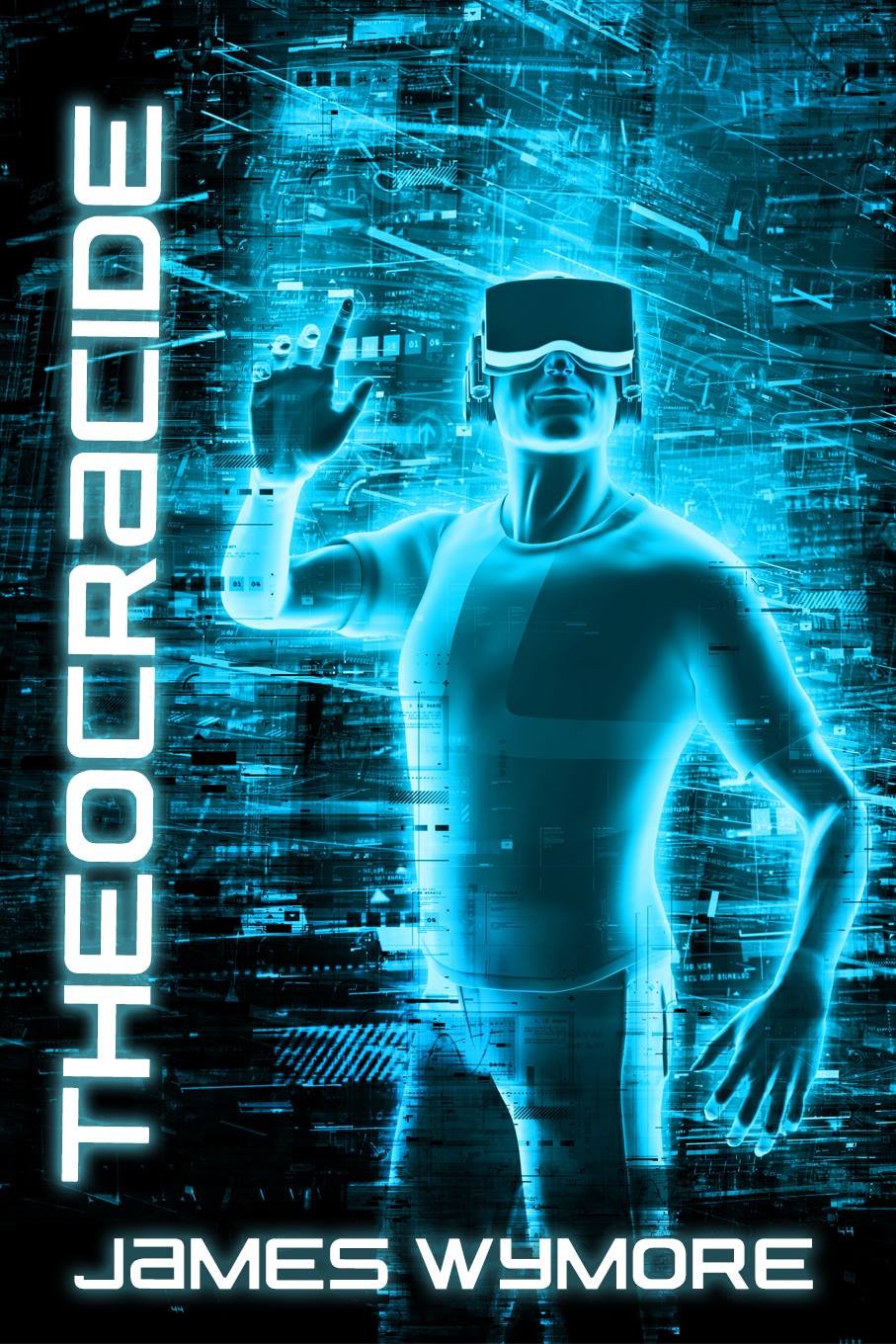
Theocracide – newly released in audiobook!
Theocracide
In the future, everybody wears computer glasses that scan the
world and project whatever you want to see right in front of it. Through
perfected augmented reality, the buildings and people blend seamlessly into
whatever movie or video game is running. We all see whatever we want, all the
time. Nobody cares what clothes they wear, because the rest of the world sees
them as pirates, robots, or anything that suits their current media. Even the
cars are self-driving, because nobody wants to pause the streaming feed.
In other news, the world is under attack by aliens. Disease is
decimating the human population. A man takes over America and declares himself
to be a god.
Nobody cares, so long as they don’t turn off the wi-fi.
Jason Hunt has the perfect life. A scholarship university
athlete with an amazing girlfriend, his future couldn’t be brighter. Then his
father drops a few family secrets on him—
Secrets of treason and heresy, which put him in direct
conflict with the reigning Theocrat.
“Wymore weaves a fantastic tale while taking a good hard look at religion, politics, immortality, entertainment, and technological advancement. If you’re looking for a thrilling sci-fi adventure that beautifully mirrors current real-world issues and advancements then this is the book for you.”
Andrew Buckley (Author, Hair in All the Wrong Places)
***
Thanks for joining us today! If you’d like to be notified of future posts, be sure to ‘subscribe’ using the handy links.
You can also find updates and post notifications on Facebook, Twitter, and Instagram – chose the one you like the most!
January is all about new beginnings and I, among others, have beat the goals and resolutions drum loudly and with gusto. But, have you ever thought about where the word January comes from?
Until recently neither did I. That was, until I ran across an article about Janus, the Roman god of beginnings and endings. Seeing as history holds it’s own special magic, today we will explore the history of how January got it’s name.
Both Rome and Greece both celebrated many gods, each with a very specific purpose. The majority of these gods were shared between the two cultures, each with their own specific name. The Roman Jupiter is the Greek Zeus and stands and the King of the gods. Neptune is Poseidon and is the god of the sea. Venus is Aphrodite and is the goddess of love and beauty.
Janus, in contrast, is purely Roman with no Greek equivalent and is the only god with that distinction. In ancient history, Janus was the god of beginnings and endings and presided over entrances and exits. To represent this role, his is often depicted as a two-faced god, or a god who can look in both directions.
Unlike other Roman gods, there is evidence that Janus actually lived. One of the myths declares that he ruled alongside the Roman king Camesus and was exiled to Thessaly. His children included Tiberinus, which is where the name of the Tiber river originates. He built a city on the west bank of the Tiber named Janiculum.
Shrines to Janus are generally located near river crossings or bridges and are themselves passageways to enter and exit places of reknown, the most important of these being the shrine near the Argeletum entrance to the Forum. This shrine had bronze doors which were kept open in times of war, and closed in times of peace.
Arch of Janus, Forum Boarium, Rome Located on the Tevere river Image attribution: Wikimedia Commons – artist unknown
According to Roman historian Livy, these gates were only closed twice between the 7th and 1st centuries BCE due to the Roman tendency to always be at war.
Many modern day sources will attribute Janus in the naming of January. To my surprise, I found this isn’t technically true. There is an older attribution to Juno, the queen of the gods. While it makes sense to honor her in this way, I will hold with modern sources that persist in tying January to Janus.
January marks both the end of an old year, and the beginning of a new one. It is the doorway marking the entrance of the earth into another cycle around the sun. Janus is the guardian of the same. It simply fits better.
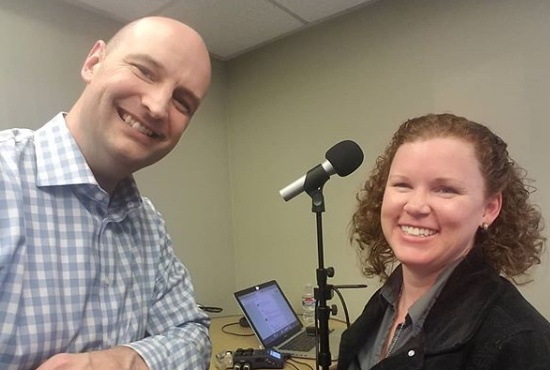
Last week I joined Jason Woodland on his podcast “Always the Journey.” We had a great time talking about everything from favorite movies, to the influences of travel, to the color that represents my work. Be sure to check it out!
***
Thanks for joining us today! If you’d like to be notified of future posts, be sure to ‘subscribe’ using the handy links.
You can also find updates and post notifications on Facebook, Twitter, and Instagram – chose the one you like the most!
There are very few lessons more powerful than those encouraging people to continually seek improvement and to be their best selves. Today’s guest, Mike Thayer, is a shining example of just that. He’s chosen to live fearlessly and reach for his dreams. He’s come to share a powerful message – why showing is so much more powerful than telling.
You get a lot of writing advice as an author. Murder your darlings, avoid adverbs, shun passive voice. The most oft repeated advice, however, has got to be “show, don’t tell.” It’s one of the simplest to understand and yet hardest to consistently apply. It’s also one of the most powerful when done right.
Don’t just tell me that the house is spooky, show me the house is spooky and I’ll arrive at any and all necessary conclusions myself. Talk of the disembodied whispers, the creaking floorboards, the apparitions that only appear in your peripheral vision. If you’ve done it well, I won’t just understand that the house is spooky, I’ll feel it, I’ll see it in my mind, and I’ll share the experience with others. By showing we unlock the true power storytelling, we tap into the essence of why we’re writing in the first place: to transport someone to a different world or see through the eyes of another person.
The power of “show, don’t tell” extends beyond the literary world, however. It isn’t just the way we should write. It’s a way we should live. If you’ve wronged someone, don’t just tell them that your sorry, show them. If you care for someone , don’t just tell them that you love them, show them. If you want to help the sick, dispossessed, and persecuted, if you want to exercise and eat healthy, if you want to learn to play an instrument or write a novel, then don’t just tell yourself or tell the world. Show it.
If you do it well enough you probably won’t even need to tell the world, because we will see it and we will feel it. Talking about something is easy, but I was always told that talk was cheap. After writing a few novels I think I understand that phrase better than ever. Do more than talk. Do more than tell. Show.
About today’s guest:
Mike Thayer is a proud father, lucky husband, passionate author, viral blogger, degreed engineer, decent impressionist, inept hunter, erstwhile jock, and nerd.
He has cast a ring on the slopes of Mt. Doom, eaten a feast at the Green Dragon Inn, cemented Excalibur in a sandstone block, tasted butter beer at Diagon Alley, built a secret door to his storage room, and written a fantasy novel. What else is left, really?
The Epic Adventures of the Techno Wizard: The Uncharted Lands
Rebellion against the Emperor of Avalon grows as rumors spread of the Collector’s defeat at the hands of the Techno Wizard. Sam Shelton and his friends now seek powerful new allies as they travel to the Great Rampart of the Uncharted Lands – a towering, armored wall built for a single purpose: to keep the citizens of the Wildland Kingdom on one side and the foulest monsters in all of Avalon on the other.
Something, however, is not right in the Uncharted Lands. The attacks on the wall grow fiercer, more frequent, more coordinated and Sam’s drone catches a glimpse of an evil long-forgotten.
Can Sam and his friends convince the Queen of the Wildland Kingdom to fight the emperor or does a slumbering threat pose an even greater risk?
You can buy your own copy of The Epic Adventures of the Techno Wizard: The Uncharted Lands on Amazon and also iTunes,Nook, and Kobo.
***
Thanks for joining us today! If you’d like to be notified of future posts, be sure to ‘subscribe’ using the handy links.
You can also find updates and post notifications on Facebook, Twitter, and Instagram – chose the one you like the most!
No, this isn’t a goal writing post. I swear it. No one wants to read yet another one of those. Besides, it’s mid January, trendy goal-setting posts are not allowed past this point.
This is totally a motivating “set your intention” mindful living kind of post.
And I’m all about motivation!
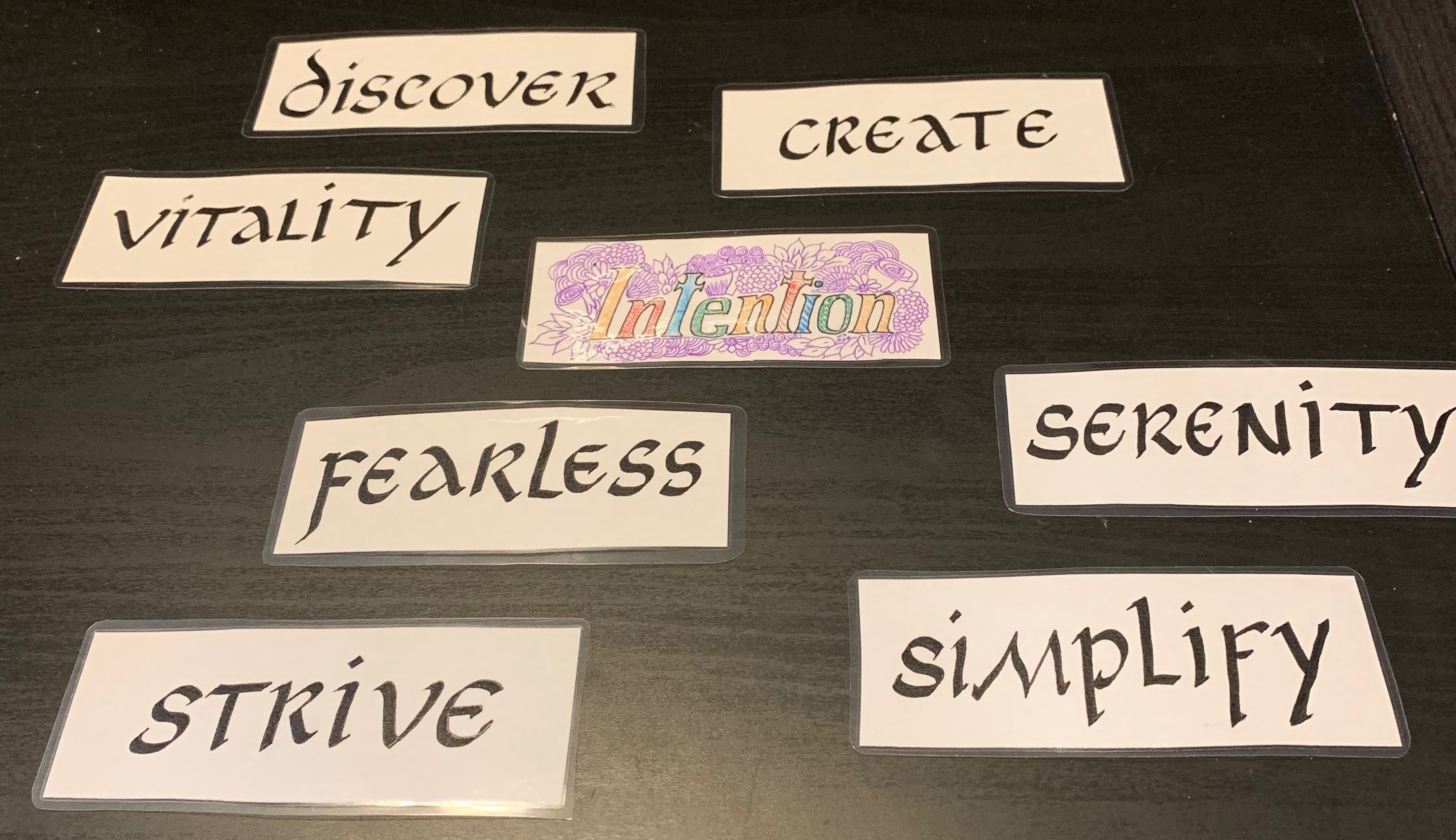
This year, I didn’t want a set of structured goals looming over me. It’s not that the goals aren’t helpful – structured goals are a powerful tool – it’s that I tend to get carried away with the details and that causes anxiety. If I create all those details, then there’s the pressure that I might get it wrong. Instead of spreadsheets of detailed goal planning, I’m embracing a single word:
‘INTENTION’
As a busy mom, everyday brings with it a new set of challenges. Instead of fighting the never ending tide of changes and feeling like I’m constantly behind or missing out, or doing it wrong, the focus instead will be on what I want as the desired result.
It sounds super hippy, that’s why I like it. It’s not going to solve my problems, just my mindset. And a healthier mindset can move mountains.
In addition to reminding myself to live each moment with intention, I’ve created a series of power words to help focus that intention from day to day.
In the morning, somewhere between making breakfast and checking if everyone’s teeth are brushed, I take a moment and consider my day and the challenges I might face. One of these words will best encapsulate what I need to focus on and I stick it to my monitor as a reminder.
Stay tuned, every third Wednesday of the month is now power word day here on the blog, where I discuss what each word means to me and how it has helped me work toward my goals.
A huge thank you to Jenelle Stone for her class on power words and goal setting, I loved it!
Do you use focus words? What words do you find powerful? Share in the comments below.
***
Love fantasy and sci-fi? Go check out the Fantasy and Sci-fi Reader’s Lounge over on Facebook. Everyday new authors visit the page to talk about their books and also their favorite fantasy and sci-fi. Even better, there are lots of contests and giveaways of the freshest fiction. Go check it out!
















 Jodi L. Milner, Author