Supporting that Writer in your Life

Chances are one of your friends or family members have decided to take the path less traveled and have started to write seriously. They work from their home office or a laptop on the kitchen table and work on their ideas during every spare minute they can get. They might have another job that pays the bills or the support of a loving spouse that enables them to pursue their dream.

Writers come in all varieties, ranging from the uncommitted hobbyist who maybe spends a handful of hours a month or less on their craft, to the professional who writes full-time.  I fall in the middle somewhere. Most of my day is spent trying to squeeze in a few hours of writing work between caring for my 3-year-old who likes lots of attention, keeping the house fed and the family clean. When I am writing, that work is divided between blogging, drafting new ideas, manuscript editing, beta reading, book reviews, and self promotion.

While I can’t find any balance between my writing and normal life, perhaps you can help the writer in your life find theirs.

Here are a few helpful articles to help you with that writer in your life:

I’ve Been Sherlocked

sherlock-s3-umbrella-ss-01

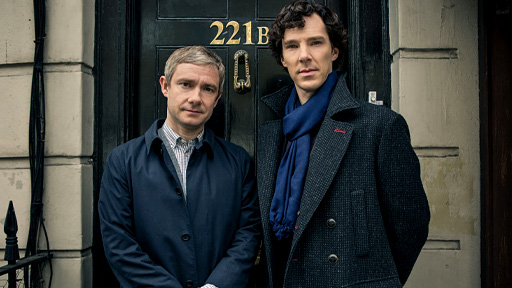
With a pair like Freeman and Cumberbatch, you can’t go wrong.

It’s official. I’ve fallen into yet another fandom. It was only a matter of time before Sherlock wandered into my life. If anything, it’s a natural progression from both Doctor Who and The Hobbit. Ok, not really, but there’s the BBC angle and another show that they both were in, so it’s close.

If anything, starting viewing this late into the seasons is a bit of a perk. I don’t have to wait as long between seasons, which has been the number one complaint with the show. At the same time, I’ve seen so many spoilers that the epic moment when Sherlock tosses himself from the building has been completely spoiled. (And if you hadn’t heard that, what rock have you been living under?) I’m still a season out from that point.

When you only watch between 30-45 minutes of grown up programming a day it takes a while to get through a season of anything.

Sherlock has a lot of great stuff going for it. First of all, the stories are well written, which as a writer means a whole heck of a lot. Secondly, they found a truly inspired pair to play Sherlock and Watson.

Everyone loves Benedict Cumberbatch’s performance of Sherlock in much the same way that everyone loves Leonard Nimoy playing Spock. He’s broody, he’s complex, he’s hyper-intelligent, he’s got a sensitive underbelly that he very rarely shows, but when he does it is overwhelming. It makes him instantly fascinating to watch, like some rare exotic animal. And then there’s his voice, which can be compared to rich deep dark chocolate ganache.

Sherlock would not be half as interesting without his Watson. In the literature Watson is there as Sherlock’s foil. He responds to Sherlock’s bizarre behavior as any normal person would and gives the viewer an anchor to hold on to as well as perspective. Martin Freeman serves as a perfect foil. He’s smart in his own way, but his is an accessible and useful knowledge. He knows how to function as a normal human being, where Sherlock often forgets. It’s his responses to Sherlock, his bafflement, his willingness to help a friend, his innocence, that makes the whole program work. He gives the audience that much needed dose of reality. He is the warmth against Sherlock’s frosty exterior, he is the humanity against Sherlock’s disregard for other’s feelings. And he is completely adorable.

The show itself tends to be dark and brooding and for me it’s best sampled in small doses. Most of the crimes to be solved revolve around murder and the basest elements of society and the show has no qualms dragging the viewer into the thick of it all. There is adventure and intrigue and the thrill of the chase paired with this really unique and often charming relationship between two unlikely friends.

All in all I consider it a hit and hope that by some stroke of luck they release another season before I get to the end of this one!

Writing Tip: Eliminate Unnecessary Words

Today for Writing Wednesday we are outsourcing and checking out the writing tip about cutting unnecessary words over at Creative Talents Unleashed. Enjoy!

Raja's Insight's avatarRaja's Insight

Photo 10

We have discussed using too many long or uncommon words before. It can distract your readers from your message. This time, we will discuss using unnecessary words in your writing. If you can explain something in ten words instead of thirty, then it is often better to eliminate those twenty words that you do not need.

Many writers find it difficult to write very short pieces. You need to be able to describe something, tell a story and leave a message in a small number of words, which is a difficult skill to master. There are many ways to practice cutting down your word count and removing words that are merely there to fill space and have no real significance in your piece.

In poetry, you could try rewriting an old poem but cutting the word count in half, or if you want to practice in a specific form…

View original post 174 more words

Summer 2015

Yesterday marks the first official day of summer and that means making plans to survive the hotter months. It was also Father’s Day – (a huge happy Father’s Day to my dear dad who reads my blog, love ya tons Daddy!).

As much as I’d love to say I’ve got it all figured it out for this year, I don’t. Because of year-round school my kiddos only get a three-week break, which isn’t much compared to traditional, but sometimes still seems like forever.

I want to make those three weeks count and not have it turn into another lost opportunity.

The more ambitious part of me wants to plan crafts and activities for each day and be super active. I’ll teach them new skills like crochet and beading. We’ll work out in the garden and grow fun food. We’ll visit museums and go swimming. It sounds fun, and exhausting.

The more realistic part of me knows how this has gone in the past. I’ll bring out a project that I’ve spent time preparing. Before we even start, one kid will start whining that he doesn’t want to do it. While I try to convince him how much fun it will be the other two get into the materials and start opening up and pouring out and dumping things. I try my best not to lose it because now I have to help them find all the bits they each need from the wreckage and they are frustrated that it doesn’t look like how it’s pictured on the box. While all of this is happening, the third child will have to be taken potty. The second I leave the other two will wander off back to their video games. When I get back I have to choose if I want to repeat everything again or just scrap the whole idea.

Here’s to another summer. I will plan a few projects for them as well as for me. I hope that everyone has matured a bit since last summer and maybe things will go better.

Until then, wish me luck!

Genre Talk: Dark Fantasy

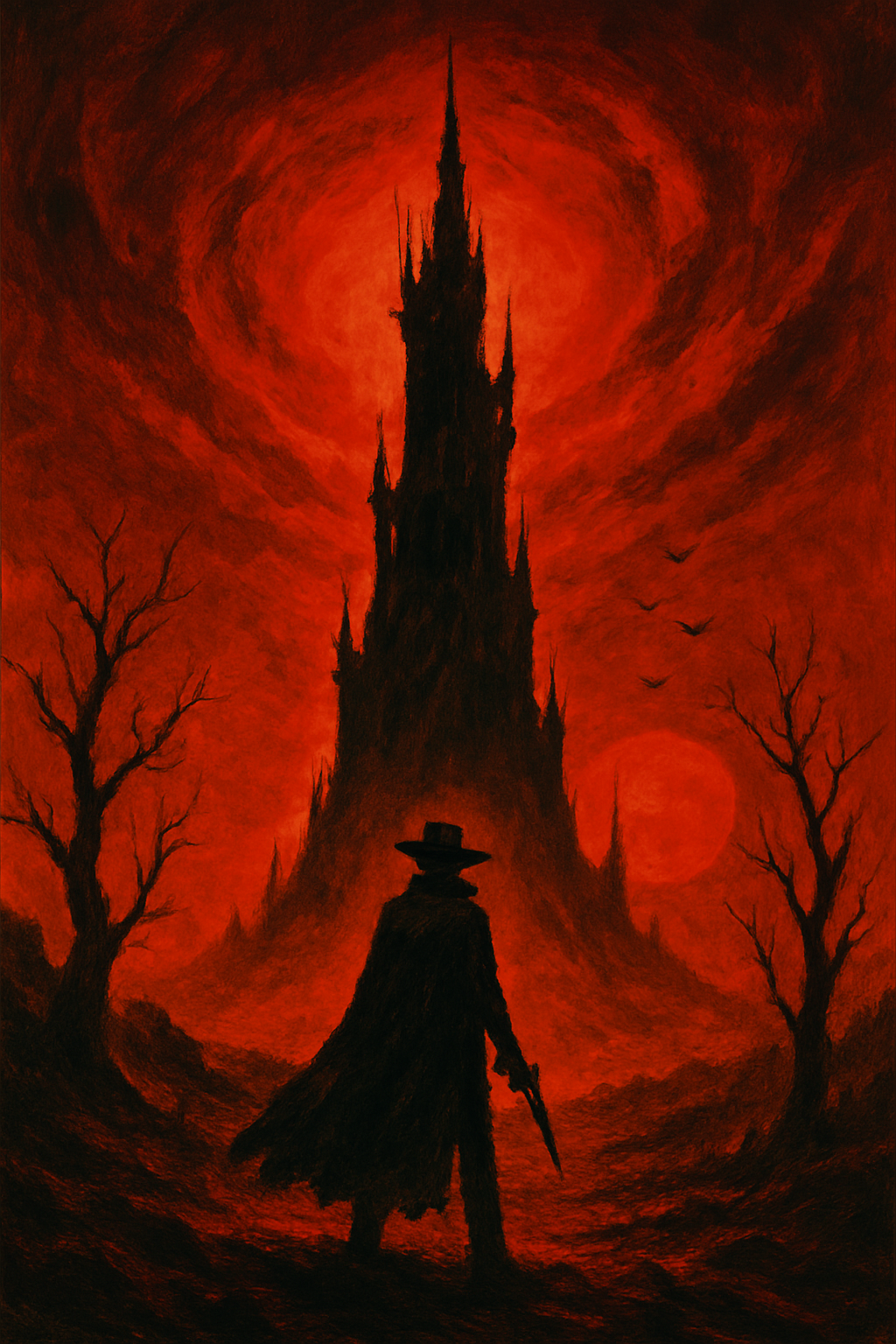
Dark Tower Image courtesy of ChatGPT

From heroic to epic and everything in between, the fantasy genre has something for everyone who loves a touch of magic in their fiction.  Fantasy is defined as any story, artwork, or film with elements that are scientifically impossible and are often set in imaginary worlds. That which is impossible is explained as magic and includes people or things that can do the extraordinary.

Dark fantasy takes those elements and adds horror.

These works, which include literary works, art, and film, are dark and gloomy and often give the viewer a sense of horror and dread.

There is still a bit of debate between the finer points of what elements make up a dark fantasy. The point where people are divided comes down to the setting. Some argue that supernatural horror set on earth should be considered “contemporary fantasy” and “dark fantasy” should be reserved for supernatural horror that occurs on secondary worlds.

The term gets confused further when writers use the term “dark fantasy” and sometimes “gothic fantasy” it as a less lurid way to refer to horror.

Because the definition is fairly vague, works classified as “dark fantasy” come in every shape and size. There are no elements or tropes that must be present beyond the presence of supernatural elements and a dark, brooding, tone. So yes, there be vampires and werewolves here.

iwtv_family
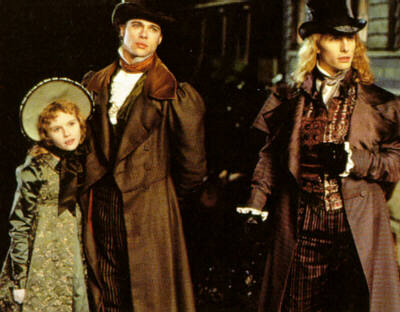
And everyone knows that these Edwardian vampires wouldn’t dare sparkle.

Popular works that fit in the Dark Fantasy category include: Anne Rice’s Vampire Chronicles, Neil Gaiman’s The Sandman, and Stephen King’s Dark Tower Series.

***

Read more Genre Talk articles:

The Headcanon Defined

If you are a follower of any fandom to the extent that you frequent fan sites and Pinterest pages then you will have encountered the word “headcanon.”

The first time I encountered the term I imagined it in literal terms and defined it as something to think about that blows the mind. This would be more true had it been spelled headcannon. BOOM!

When I noticed that it was “canon” and not “cannon” I realized I was missing something and set off to find the truth.

The secret is in the “canon’ itself. The word is originally used in two ways. In the first, a canon as a general rule or law by which something else is judged.  The second is a collection or list of sacred books that are accepted as genuine. Used in terms of fandoms, the “canon” is what exists as presented by the creators of the series.

The Doctor Who canon is all of the episodes in existence and the stories and characters contained therein.

When we add the “head” onto the “canon” it changes it to mean an alternate belief about the stories or characters that exists in the head of the viewer. While the term suggests that these beliefs are personal, thanks to the internet there are whole websites devoted to some of the more popular headcanons.

In Doctor Who, there are several awesome headcanons, here are a few:

tumblr_mpt0rnO5FC1sxkiemo1_500

tumblr_mvehjrqnsN1r3bgy8o1_500

tumblr_mpj0cgtnbD1sxkiemo1_1280Have an awesome headcanon to share? Tell us in the comments!

Book of the Month: Redshirts by John Scalzi

91Hx5ImdhzLThis month I ventured into a new and unfamiliar land where reality collided with fiction in a fun and thoughtful way. In the Star Trek universe the sad fact exists that if you are wearing a red shirt and are sent on an away mission, chances are you are going to die.

Scalzi’sRedshirts takes this truth and turns it on it’s head. The crew start asking questions when they notice the abnormally high death rate on their vessel. Crew who aren’t in the officer line have watched their friends leave on away missions never to return. They have learned it’s best to avoid the senior officers at any cost. Being found by one certainly means being assigned to another of these deadly away missions.

Another Star Trek truth that Redshirts makes fun of is the magic box that solves the most insanely complex problem the same way that a microwave heats food.  You insert the correct samples, set the timer for slightly less than when the catastrophe is going to occur, and wait patiently for it to finish. The data it produces is then taken personally to the bridge and presented to the captain, always stating that there is some sort of random made up problem. This is when the captain dramatically looks over the data and within seconds solves the problem, showing just how awesome of a hero he really is.

There are several more of these little gems hidden inside the book, if you want to find them, I suggest you read it.

10416381

Our main character, Dahl, is one of these minor members of the crew who are often targeted. The older crew don’t warn him of the dangers in an attempt to save their own skins and he is assigned to an away mission where he barely survives. When he returns, he wants answers and he demands to be told everything. This line of questioning leads him to the mysterious Jenkins, a hermit who has sealed himself into the utility passages of the ship. Jenkins has a crazy theory that logically explains why the ship works like it does. It’s the alternate reality created when Star Trek was written. Every death, every dramatic rescue, every inconsistent part of their world is there because some writer has invented it to make entertaining television.

Dahl comes up with an insane plan to get it all to stop, and it involves jumping dimensions.

***

My Review:

I got a kick out of this book. For anyone who likes Star Trek but finds some of the science and story lines far-fetched, this book is a joy ride. It’s written in a very direct and to the point way, not wasting any time to dwell on the scenery or the deep internal turmoil of the characters.  What I found most unique is that the characters start to become self-aware that they are indeed characters being written. If you like light sci-fi parodies, discussions on inter-dimensional theory, and paradoxes, this is a great book for you.

However – reader be warned. There is a fair amount of rude language sprinkled throughout, enough to make it rated a solid R. There is also casual innuendo, violent (but humorous) death, and an absence of a bad guy. Although I didn’t find it a problem, some might not like the three-part coda ending where after ending of the principle story, there are an additional three sections that explore what happened to three of the minor, but significant characters.

Happy Reading!

Film Icon Christopher Lee Dies

It is a rare thing when there is an actor who is known and loved across several generations. Christopher Lee’s first films were made when my parents were barely teenagers. For me growing up, he was that guy who always ended up in the old-timey horror flicks and also a Bond villain. For my kids he will be immortalized as Saruman and Count Dooku.

There are few actors who have as long or as varied of filmography as Christoper Lee. IMDB clocks in 281 credits over the course of a 60+ year career. True to the workhorse he was, he die as he was preparing to start filming for his latest movie.

To celebrate one of speculative fiction’s favorite actors, here are several photos of Christopher Lee through the years.

Hammer Horror's Dracula
Hammer Horror’s Dracula – Lee’s iconic defining role
Ultimate Bond Villain - The Man with the Golden Gun
Ultimate Bond Villain – The Man with the Golden Gun
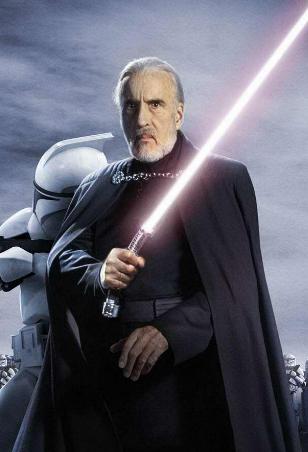
We mustn't anger Count Dooku, he's got a lightsaber
We mustn’t anger Count Dooku, he’s got a lightsaber
Monsieur Labisse from Hugo, on of Lee's rare unevil roles
Monsieur Labisse from Hugo, on of Lee’s rare unevil roles
No list would be complete without Saruman the White

While he rarely ever took the spotlight, the roles he did take he made personal and memorable, and that’s the stuff that makes a man a legend.

Rest in peace – you’ve deserved it.

All images are used here under Fair Use for discussion, review, and educational commentary. They belong to their respective copyright owners.

Keeping the Story Real

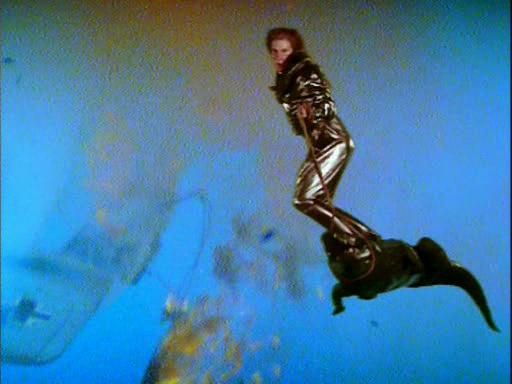
If Ace Rimmer can ride a random alligator then it must be ok, right?

If Ace Rimmer can ride a random alligator then it must be ok, right?

It’s writing Wednesday and yet another chance to inundate the webverse with more unsolicited writing advice. Woo Hoo!

Today’s topic is about keeping it real when it comes to plotting a story. I’m sure we’ve all seen or read at least one story where something happens that’s hopefully exciting or at least vaguely interesting, but has nothing to do with the story. Jack M. Bickham refers to this as “dropping alligators through the transom.”

Unless your story is about mutant alligators taking over an office building, there is probably no good reason for it to happen.

I can hear the argument already.”This scene was kinda dull so I thought adding killer bees would add a bit more interest.”

Ahem… If your scene was dull, and you knew it was dull, why is it even in your story? Just sayin’

The point that I’m trying to make is that all story elements need to make sense. Being super cool isn’t a good enough reason to add something new. It has to feel like it belongs. David Farland also talks about this in different terms.  He says that the story needs to be honest to itself. This doesn’t mean it has to be true, a good piece of fiction weaves together a multitude of realistic elements in new and intriguing ways.

Not sure if you are guilty or not? This is where having another critical set of eyes check over your story can be a life saver. As writers we can get blind to our own work. The story is so alive in our head that it’s hard to see when we might have added something that doesn’t make sense.

So, what happens if we have dropped the proverbial alligator? Relax. It’s not the end of the world. One of two things might have happened. The first is when you have added something that totally works in your world, but you’ve neglected to build your world enough to make it feel natural to the reader. The fix is to add a few more passages during the early chapters of the book, or scenes of the story, that make your alligator fit.

The other thing that might have happened is a bit tougher to fix without removing the offending element entirely. This is when something has been added to spice things up, but it feels like it doesn’t belong with the story.

Say you have a space captain that needs to land his failing craft before it explodes. It’s taken a hit from a Xabulon warship and is being pulled into the planet’s gravity. While wresting the controls, the second-in-command has an allergic reaction that swells his throat shut.

We have two big problems. Saving the second-in-command and landing the ship safely. If the allergic reaction has something to do with the enemy that they are facing then by all means use it and slam your readers with a super dramatic scene. However, if it doesn’t, it feel like it’s coming from nowhere and might just serve to confuse or worse take focus away from the real problem.

There is one place where random elements work well, and that’s with humor. This is where introducing the delightfully unexpected can pay off. That said, there are limits. Too much and it comes across as goofy or silly. Ace Rimmer, seen in the picture above, is a character in the BBC space comedy Red Dwarf. His entire character revolves around the absurd and unlikely, like riding an alligator to escape an exploding airplane. It’s silly and not at all logical and that’s what makes it fun.

Whatever you end up doing, Mind your alligators and Happy Writing!

Getting Angsty?

In a recent book review I mentioned that angsty teenage books aren’t my thing. It’s nothing personal, I’m not into romance for the sake of romance either. For me, the stakes aren’t high enough, or at least I don’t care enough about them, for either to draw my attention.

Which is why I was really surprised when I found that my own writings and also the TV shows that I prefer watching have plenty of super angsty moments.

What’s the difference?

For me it’s motive and reach. In all stories the main character has a really big problem that he or she needs to overcome. In teenage angsty novels these problems tend to revolve around the internal needs of the teenager. She needs to feel accepted. Her boyfriend is cheating on her. She is dying of a terminal illness. He is a wimp. Her boyfriend is a vampire. Not all in the same book, although that would be awesome.

None of the problems extend beyond the main character or their immediate friends. If the worst should happen, yes it’s devastating for the character, but it the effects rarely leave the community.

In my preferred fandoms, and also in my fiction, the scope tends to be larger. The problems affect whole cities, worlds, or even universes. When something goes wrong, it threatens more than a few emotional teenagers, civilizations are at stake. The problems can include anything including universe eating temporal rifts, demon fueled armies, megalomaniac wizards, and gods squaring off against each other.

That’s not to say that the same internal problems don’t exist, they most certainly do. But they exist layered along side much bigger issues.

Last night I had my own personal angst fest with non other than our friend the Doctor. Doctor Who is a great example of how layering massive universe-sized problems alongside intense personal conflict makes for some very compelling stories.

I have a few favorite doctor moments, specifically with the 10th doctor.

In the episode Journey’s End, the season finale for the fourth season, there are lots of different angsty elements at play. It’s touted as the most tragic episode – guaranteed to give anyone the feels. The villainous Daleks have kidnapped planet Earth to create a reality bomb that will in essence destroy all matter in every universe. The Doctor has found several of his previous companions to come help avert the crisis. These include Rose Tyler, the companion he loved and lost; Donna Noble, the closest person he’s had to a best friend; and Martha Jones, the woman who loved him but he didn’t love back.

In the course of the episode a second Doctor is created, who is essentially a clone except for one vital difference – he is not a Time Lord and will age and die like a human.

I’m a sucker for a good tragic character. I love Hamlet, Frodo, and now, the Doctor. In Journey’s End. The angst comes from the multitude of problems that can’t be solved without sacrifice. The Daleks must be defeated to save Earth. Rose must be returned to her own parallel world. Donna, being human, cannot sustain having the knowledge of a Time Lord.

The Doctor must sacrifice his love for Rose by sending her off with the clone doctor to repair the rift in time. To save his best friend Donna’s life, he must remove all knowledge of himself from her mind, and lose her forever. His clone has committed genocide on the Daleks, getting him, a man who abhors violence, named the Destroyer of Worlds. In essence, everything that is important to him is ripped away and he is left alone once more. doc who rain

Take that teenage angst! I know it’s unrealistic, but it’s oh so good.