Have you ever watched a toddler walk through a park? The first thing you’ll notice is they don’t walk. They stop every few steps to bend and look at something. Every moment is engaged in the adventure of discovery. Each rock, bug, and flower is a source of wonder and amazement.
“Look!” They call. “Look, look, look!” Their excitement is infectious.
As grown ups, as we are wandering the world on our own, how often do we truly look anymore? We’ve seen dandelions and ladybugs hundreds of times. What is left to see?
This is why I’ve chosen the word ‘discover’ as one of my power words this year.
Dewdrops on a ladybug
The word ‘discover’ is full of the excitement of curiosity and the possibility of seeing something new. Our world is filled with undiscovered and unappreciated wonders. Each flower holds its own unique beauty. Each sunrise is its own play of light and color. Sometimes we need to slow down and simply take the time to look.
For some, this act of slowing down and taking time to look is difficult but needed. We often get caught up in the business of getting things done. There are always lists of chores and errands that follow us wherever we go. Taking that extra second to allow our curiosity to take charge is time where we get to breathe and live in the moment.
For me, to discover means to allow myself to try new things. Sometimes it’s a book or movie I’ve been curious about but not something I’d normally chose. Sometimes its taking my kids to a new park we’ve found while driving somewhere else. Sometimes its experimenting with a new recipe in the kitchen. Each of these acts brings the potential of experiencing something new; a new idea, a new view, or a new taste. Each exposure to something new helps us redefine ourselves and what we enjoy.
This act of being very conscious about the act of discovery also means giving myself permission and time to follow random thoughts and bursts of creativity and see where they lead. The more I’ve allowed the act of discovery to guide my work, the more creative impulses come my way. This not only has influenced several of my writing projects, it’s created opportunities and opened doors.
It is my belief that we are all creatures of curiosity. By allowing ourselves time and permission to be childlike in our pursuit of discovery we can find a deeper appreciation for the world we live in, and in turn find happiness.
***
You can also find updates and post notifications on Facebook, Twitter, and Instagram – chose the one you like the most!
Magic and Science? It’s my dream come true! When it comes to magic there are two distinct teams. One team cheers for hard magic systems, such as what’s found in Brandon Sanderson’s books, where there are clear rules and limitations. The opposing team cheers for soft or undefined magic, such as what’s found in The Lord of the Rings, where there are no limitations and those who use it are shrouded in mystery. Which team will win? Easy – the team you like the best!
Today we welcome my favorite mad scientist author and board game enthusiast to the blog. Ryan Decaria is going to try to win points for Team Hard Magic in his article about magic systems and mad science. Cue the lightning! Muah ah ah!
My mantra when writing science fiction and fantasy worlds is to treat magic like a science and to treat science like magic.
I’m gonna let that sink in for a minute.
Magic comes in two varieties: magic systems with rules and undefined magic. Brandon Sanderson is famous for the former in his Cosmere novels. Gandalf in the Lord of the Rings is a great example of the later. Who knows what powerful spell he’s going to come up with next. Still, in either methodology, magic can be seen as a part of that world’s natural laws.
Like any other natural force, magic can be studied, classified, and theorized about. The scientific method can be applied, because the cause and effects can be scrutinized. I’m going to say it again. Treat magic in your story as a science field of that world.
Now, your characters will probably not be scientist studying that magic (cept how cool is that), so they won’t necessarily care to use science or science terminology when wielding magic. I don’t think about gravity or how my internal combustion engine gets me to work. I just drive.
I came up with a great litmus test for your fantasy’s magic system. Let’s call it the Mad Scientist Experiment. For your magic system, imagine a mad scientist character living in your world who is trying to use the magic in new way by combining aspects or segments of your magic in unnatural ways. This can be the Frankenstein scientist, driven by the desire to create, the Doc Brown scientist, eccentric but good-hearted, or the nefarious scientist like Doctor Poison from Wonder Woman.
Does your magic have enough meat for them to operate? Can they create life? Can they seek immortality? What are the costs? What are their methods.
If you can’t answer any of these questions, perhaps you haven’t given your magic system enough depth. Answering these questions, might give your magic system a needed boost.
Here are some examples of great mad scientists in epic fantasy with mild spoilers:
Saruman from Lord of the Rings
Focused on industry at the expense of the natural world
Breed a new species of orc
Created great forges and explosives
Became obsessed with power
Ex-maester Qyburn of A Song of Ice and Fire
Anatomical experimentation on still-living people.
Excellent surgeon or a Torture Technician
Created a Frankenstein-like creature
The Lord Ruler in Mistborn (spoilers in this one get a little meatier)
Found a way to gain immortality
Created new races and the inquisitors
Changed the natural laws of the planet
Combined two kinds of magic to great effect
But what about science fiction?
There are two kinds of science fiction: One cares about how the science works and the other cares about how the science affects the world.
In the first, science knowledge is at a premium, and you better get it right. In the latter, the science just works and no one is questioning why. Take hyperspace in Star Wars or transporters in Star Trek. The more you dig into the science, the more preposterous they sound, so you don’t dig into the science. You avoid the science because it just works and your story is about what that technology does to society and to people.
You treat it like magic.
I love the term handwavium because it describes the science in terms of magic. Handwavium is what powers unrealistic or impossible technology, such as faster-than-light travel, teleportation, and artificial gravity.
In conclusion, to create a rich and deep magic system, imagine how a scientist would study the magic and how a mad scientist would exploit it. You might discover a few plot points and a couple of awesome characters along the way.
Remember my mantra:
When writing science fiction and fantasy worlds, treat magic like a science and science like magic.
My favorite mad scientist author, Ryan Decaria
About today’s guest:
Ryan Decaria was raised on science fiction and fantasy novels and 80’s adventure movies. On rainy days, he sulks on the window, sill waiting for a treasure map, an alien buddy, and his own luck dragon. Ryan is the author of Devil in the Microscope and its soon to be release sequel, We Shall Be Monsters. He is also the host of the Meeple Nation podcast where he discusses the board game world. You can find him at madsciencefiction.com musing about how mad science uses the best bits of science fiction and fantasy at the same time.
Bonus points if you can spot the rat in the picture!
When “science-fair-geek” Anika goes to live with her scientist father in a town built around his mysterious genetics laboratory, she is determined to prove herself worthy of his legacy. But all preconceptions about her new life are thrown out the window when Anika discovers her father is a megalomaniac living in a town populated entirely by mad scientists. Now Anika will have to navigate her way through a high school filled with vindictive evil geniuses, deadly science projects, and unspeakable human experimentation. Relying on her wits, scientific know-how, and talented allies, Anika fights for her very life, and the lives of her new friends. Will Anika have to become like her mad scientist father in order to save the day?
***
You can also find updates and post notifications on Facebook, Twitter, and Instagram – chose the one you like the most!
While there are a lot of books out there with terrific messages, there are also a rampant amount of books out there that idolize unhealthy relationships and glorify questionable life choices.
While Stonebearer’s Betrayal is far from perfect, it does contain several positive messages that I think are important for everyone.
Perhaps the most important message in Katira’s story is that everyone, regardless of if they have magic or not, has the power to change a situation. Choosing to be brave and make hard decisions can be scary, but in the long run it’s ultimately more rewarding.
#2 – There is a special magic that can only happen between people who have been together for years and years.
Katira’s parents, Jarand and Mirelle, have been together for almost two hundred years. They share a magic bond that helps them feel and understand what the other is feeling. Throughout the story we get to see the beautiful give and take of their relationship and how close they are to each other. While magic like this doesn’t exist in the real world, this kind of closeness and empathy can be cultivated when a couple is willing to continually work on improving their understanding of each others needs.
#3 – If a relationship isn’t working out, it’s okay to part in friendship.
Sometimes things don’t work between people. It happens. Pop culture constantly shows us that this break up calls for drama and nastiness, but it doesn’t have to be this way. Often, all that’s needed is a heartfelt conversation where each person feels safe to talk about how they feel. It takes a lot of courage to do this because as we all know, feelings hurt. The more people can see this happen in the media they consume, the more likely they will be willing to try.
#4 – It’s okay for things to go badly, it’s not okay to endlessly wallow in it.
Most fiction does an admirable job showing that those who wallow in self-pity only manage to prolong their own suffering and cause themselves additional problems. However, sometimes stories reinforce the message that the sad person gets all the attention while the person who chooses to move on is portrayed as heartless or uncaring. There can be a balance. It’s okay to feel bad when things go wrong, in fact it’s healthy to allow a moment to mourn or be angry. It’s not healthy to remain there longer than necessary.
#5 – You don’t have to be a princess or specially chosen to do something amazing.
There is this very damaging idea that ordinary people can’t do important things, that they need special permission or the perfect opportunity or the right people to guide them. This is far from true. Anyone can take steps to work toward a challenging goal. It takes courage to step out of the box, to break the mold, and to do the incredible – and that’s why it’s powerful to see when others succeed. You can succeed too!
Fortune favors the bold, Aristotle
***
You can also find updates and post notifications on Facebook, Twitter, and Instagram – chose the one you like the most!
It’s Friday, which means I get to bring you samples, interviews, and articles from new voices around the world. Today, I have a special treat for you. Friend and fellow author, Nicholas Adams, has given me permission to share the first chapter of his novella “Imprint” a hard sci-fi with a medical twist.
In return, I got to go have fun and answer interview questions on his blog. Go here to check it out.
Cover of Imprint
First Chapter Sample of Imprint, a Novella
by Nicholas Adams
Malcolm slammed his fist against the mirror. “I’m telling you, Warden. The process isn’t ready yet!”
From under the spider web of
fractured reflections, the older man’s image steepled his fingertips. “Now that
you’ve gotten that out of your system, would you mind repositioning me so I can
see you clearly?”
Malcolm sighed, defeated. He swiped
a finger across the broken glass. The floating
screen glided across the mirror’s surface to rest within the last unblemished
area.
“Now
that we’ve gotten that out of the way,” the man in the mirror glowered
over his thick-lensed glasses, “let me remind you of the conditions of your
exile.”
Malcolm braced himself for the full
version of the warden’s favorite speech. “Your prior technological breakthrough
caused the outbreak,” he began as if reading from a teleprompter, “and in spite of your synthetic organs’ success in
treating life-threatening illnesses–,”
“You mean lifestyle threatening
illnesses,” Malcolm interjected.
The warden interlocked his fingers
and lowered them onto the black marble desktop, clearing his throat in
frustration. “Be that as it may, it was your flawed technology that caused the
disease that now threatens to wipe out humanity. And therefore, having been
charged with attempted genocide, you have been isolated above the Arctic Circle
because you promised the world you could fix this.”
Malcolm pounded his bruised
knuckles against the lavatory’s cold, metal countertop. “I know, I know! But I
need more time. And Cynthiana is the only remaining test subject. All the
others died before I could make the bio-synthetic interface work. There are
just too many variables. But, I think I’m getting closer. I just need more
time!”
The Warden glanced somewhere
off-screen and nodded to his unseen associate. “Time is not something of which
you have an abundance. Get to work Doctor. We’ll be looking forward to your
next progress report.”
Malcolm’s eyes automatically
drifted to the calendar hovering below the warden’s image. Seven Days.
The Warden leaned over to press the
button that would end their video-call but paused with his arm hanging in the
air. “If you don’t have something significant to report,” he said not looking
at Malcolm, “I’m afraid I’ll have to recommend that your exile will end, and
we’ll begin the proceedings to schedule your execution.”
Malcolm slammed both palms on the
broken mirror. “But, my wife’s condition. She’s terminal. You’ll be sentencing
her to death too!”
“No, Doctor Silvestra, you’ve
already done that.”
Before Malcolm could respond the
warden’s image blinked out of existence, leaving him alone with only his
anguished thoughts.
It’s
all my fault. I’ve killed her. I’ve killed them all.
Malcolm’s shoulders quaked, as
stifled tears dripped into the stainless steel sink. The flood of anguish
pressing against the emotional dam broke through.
I
can’t lose her. I just can’t. The rest of the planet be damned, but I can’t lose her.
Staring past his reflection,
Malcolm spotted the ornately framed award hanging over his cluttered workbench.
His stomach twisted. Several years before, when he received the plaque, he felt
only pride and achievement.
Now, however, the image only served
to remind him of his failure to keep a promise to Cynthiana; to completely
restore her health, or, at least, free from her scars and debilitating pain.
Lettering under the bas-relief
sculpture seemed to mock him. His eyes scanned the plaque, landing on the
keywords that seemed to highlight his failure. Life Sciences Award, Innovative
Breakthrough, Synthetic Organ Replacement.
The fancy words reminded him of his
triumph—the 3D Nano-Modeling machine that built other devices on a microscopic
level. Building on his wife’s work in Neural-Mapping, together they developed
artificial organs that could mimic its
natural functions.
Newspaper clippings covering his
wall displayed headlines from around the globe. Phrases like Miracle, Saves the Life, and Cure for
Death seemed to stand out like random street lamps in a darkened city.
Other news articles littering the
wall reminded him of what he now fought against; a plague of biblical
proportions. Headlines reading Mystery, Deadly, Burn Victims, and Horrific
glared at him. The mainstream media sensationalized the outbreak by calling it The Scald.
Malcolm seemed to be the only one
who actually understood where the plague
came from; his Nano-modeler, v.8.14.
Long before he saw the correlation
between his machine and the outbreak, The Scald had already sentenced anyone
with an artificial organ to a slow, painful death.
With his newest Nano-modeler,
v.10.27, Malcolm began his exile, with
Cynthiana and a dozen dying volunteers at
a self-sufficient research bunker in the Northwest Territories.
The collapse of civilization seemed
to take only a matter of weeks.
Accusations of bio-warfare crossed every known geographic and political border
until the truth of Malcolm’s plague became public knowledge.
Riots, looting, and doomsday
prophets littered the streets around the world. Malcolm barely got Cynthiana
and himself to the bunker before the bombs fell, dooming the planet in a
nuclear winter.
However, how the world ended no
longer mattered to him. Not since The Scald ravaged his wife. Not even the
failed experiments and deaths of the other subjects made an impact on him.
Cynthiana’s body yielded to the
lesions faster than any recorded case, forcing her to remain in a pool of
bio-nutrient gel 24 hours a day. The Scald had inflicted a rare side effect on
her; three-quarters of her body became paralyzed and unresponsive to any
stimuli.
Malcolm could not help flashing back to the days before The Scald took away her independence.
***
If you enjoyed this first chapter you can find the rest of the story on Amazon: Imprint, by Nicholas Adams. I also hear you can score a copy if you sign up for his newsletter. 🙂
Want more free stuff? Check out Nicholas’s freebies page. ***
The enigmatic Nicholas Adams
About today’s guest:
Nicholas Adams grew up in the small, rural town of Boring, OR with his six brothers and sisters.
After graduating from High School in Gresham, OR he attended BYU-ID and received his Associates Degree in Pre-Med. From there he returned to Portland, OR and attended Portland State University where he earned his Bachelor’s Degree in Biology/Pre-Med before changing his career track to Architecture.
He completed his second Bachelor’s Degree in Architecture at Portland State University before going on to achieve his Master of Architecture Degree from the University of Utah in Salt Lake City, UT.
After his graduation he and his wife moved to the Phoenix Arizona area where they adopted four children over the next eight years.
Nicholas currently lives in the Salt Lake City area where he is an Associate member of the American Institute of Architects (AIA) and the League of Utah Writers.
His other interests include movies, singing and motorcycles.
It’s the first Wednesday of the month, which means it’s time for a book review. I listened to the audiobook of Heroes of the Valley at the end of 2018, right smack at the same time I was preparing for the launch of my book. It was a great distraction for all those times I needed to relax and escape the stress of planning a large event, interesting enough to hold my interest, but not gripping enough that I was tempted to stay up after bedtime.
Heroes of the Valley
The Story:
Halli Sveinsson, youngest and most awkward of the Sveinsson house, grew up listening to the stories of when his valley was a wild and dangerous place and brave men stood heroically to defend it. His reality is much more bland. The valley is ruled by laws and governed by a Council of women who demand peace and equality. His heroic attempts always end badly, usually with someone being humiliated, and that someone is usually him.
When violence comes to his home, Halli sets off on a path of revenge and his own hero’s quest. He is inspired by the stories of the brave and bold Svein, the hero from which his family took its name. Along the path, Halli learns that he is not the hero he’d hoped he’d be and returns home, guilt ridden.
But, all is not is as it should be. Not only has Halli gained a reputation of being an ill-doer, he is accused of murder. His actions put the whole village in danger from the house of Hakonsson who comes to attack. With the assistance of the lovely and brave Aud, Halli creates a plan much like Svein of old to protect his house.
My Review:
While I love a good high fantasy, especially one filled with swords, magic, and noble characters – this one was definitely different. Our main character Halli is wonderfully flawed almost to the point of being comedic. Everyone else around him tolerates him at best, and downright hates him at worst. Because he’s never really liked, he experiences a sort of freedom that the rest of his house doesn’t enjoy. It doesn’t matter what he does, he’ll get in trouble for it anyway, so he does whatever he wants. Being at the bottom of the respect ladder means you can’t fall down further.
One would think that this would make Halli depressed and hard to read, but it does the opposite. He’s got a ready wit and shares it regardless if it’s the right thing to say or not. When he’s not speaking, he’s always thinking of a way to get what he wants. His goals are neither noble or evil, but are very realistic, which makes his story that much more relatable.
Interspersed between Halli’s chapters are chapters where the legend of the beloved Svein and the Battle of the Rock are told. These fable-like stories paint the hero in such inflated terms that he’s grown much bigger than life, performing feats of super human strength and endurance that can hardly be believed. Because I was listening to the story (yay audiobooks!) I didn’t catch that there was this switch for the first half of the book and ended up very confused. When listening, there is precious little to cue the listener that this switch has taken place. So when you believe you are in a Halli chapter, it might be several paragraphs before you realize you are in a Svein chapter.
Even with this, the two stories end up complimenting each other in such a way that the reader feels they understand Halli’s drive. He loves the story of Svein so much, he will do anything in his power to become a hero.
Those who enjoy fiction with a strong Nordic feel and heavy cultural notes, plus monsters that we are never quite sure are real, will enjoy this book.
It’s a strong read, well-written with lots of excellent world and culture building. As for liking it, I enjoyed listening to it, but didn’t love it. The storytelling style made it hard to be immersed in the story the way other books do and the magical element I was hoping for didn’t come through as a significant part of the story.
I’d still give the title 4/5 stars for being ingeniously constructed, well-written, and an all around solid narrative.
***
Psst! Jodi here. Did you enjoy today’s review? Did it help you decide if this book was for you? Cool, eh?
Guess what? You can do the same for me. If you’ve read Stonebearer’s Betrayal, head on over to Amazon, Goodreads, or the book site of your choice and leave me a review.
It doesn’t have to be big and long like this one – a few sentences is perfect! Thanks in advance!
***
You can also find updates and post notifications on Facebook, Twitter, and Instagram – chose the one you like the most!
For every single person the path leading to fulfillment and success looks different. Some prefer small consistent goals, some crave the big marathon push, and then there’s Jared Quan. Known around the Utah writing community as the guy who gets stuff done (and never sleeps), he often shares his favorite quote:
“If you want to go fast, go alone. If you want to go far, go together.”
Jared is the champion of volunteering. Every year he donates countless hours, well into the hundreds, giving his time, his ideas, and his drive to the organizations he loves. Today, he shares his story with us.
I Rolled a Life Changing 20 and You Can Too.
By: Jared Quan
Four years ago, my second book “Changing Wax” was published.
I had accomplished my lifelong dream, and no one had any idea who I was.
Getting published was a massive struggle that took nine years to happen, and I
was exhausted. Antsy to do something, but not ready to take on another book, I
had an epiphany. I would use my knowledge and experience to make it my mission
to help people achieve their dreams. I had no idea what that single decision
would lead to.
After talking it through with my wife and we figured out
that I could volunteer a couple hours a week. I went out looking for ways to get
involved. Which was not nearly as easy as it sounded. I stumbled into my first
opportunity after taking a shot in the dark and emailing the Mayor of West
Jordan. Mayor Rolfe recommend that I join the West Jordan Arts Council. Shortly
after I was appointed to the West Jordan Arts Council by the West Jordan city
council. Serving on the Literary Committee under an amazing Literary Arts Chair
John Pulver, I started to learn the ropes on how to do more in the community.
At the exact same time this was happening I met Johnny
Worthen who recommend that I check out the League of Utah Writers. During my
very first meeting with the Oquirrh Chapter it was announced by Chapter
President Eliza Crosby that they needed a new Vice President, after a massive
internal debate (and texts from my wife encouraging me to volunteer), I
volunteered. Under Eliza, I was starting to learn about how the League worked
and what things I could do to help.
I worked on a few projects with the Arts Council and the
League which embolden me to find some additional small projects. I volunteered
to help author David Armstrong at the Davis County Fair, volunteered to help acclaimed
artist Roger Whiting at the DIY Festival, helped staff the League table at LTUE
and Storymakers. I started to figure out how much time I could spend on
projects and started to figure out how to better utilize the resources I have
access to.
Fast forward to today, after dozens and dozens of projects,
and events, I am now on five non-profit boards (League of Utah Writers,
Storymakers, Cultural Arts Society of West Jordan, Eagle Mountain Arts
Alliance, and Big World Network), I work four jobs (VLCM, Lyft, Real Salt Lake,
and being an author), and spend time with my wife and five kids. My mission
transformed into a passion, and then into a dream. I get to help people every
day reach their dreams.
As you can see, I didn’t get into volunteering to gain
position or rewards other than seeing people succeed. However, I discovered
that volunteering selflessly was like rolling a 20-sided dice over and over.
The number would randomly throw unexpected rewards. The key being that the service
had to be selfless.
Like a waking dream I found myself sitting in front of
hundreds of people at the LTUE conference 2019. I was sitting off to the side
waiting for my turn to be a special guest with the Writing Excuses Podcast. I
had rolled a 20, and I was being honored with a tremendous opportunity. I knew
however, that even in this moment, it wasn’t about me, it was an opportunity to
help others find ways to figure out what I had found out.
I watch as special guest Natasha Ence and Rosalyn Collings
Eves, do an amazing job on the podcast. Then it was my turn to sit with the
amazing team of Brandon Sanderson, Dan Wells, Mary Robinette Kowal, and Howard
Tayler. We talked about volunteering and ways to find opportunities to
volunteer. It was amazing.
When people had found out that I had selected to be on
Writing Excuses, everyone asked how I had accomplished such a thing. I told
people that I wasn’t sure, but I was honored to have such an opportunity, and
talk about selflessly volunteering.
Everyday I wake up and live my dream of helping people. If you add the goal, mission or passion of helping people by volunteering (not just in the writing community), you will be rolling a 20 side dice that will change your life. It will help you accomplish amazing things and give you opportunities beyond your imagination. I have to thank all the amazing people for giving me the chance to volunteer and taking a chance on me. You just have to take a chance on yourself and volunteer. I would love to see you out there.
Intrepid leader and Energizer bunny, Jared Quan
About today’s guest –
Jared Quan is a video game addict and writer published in genres from Spy-Thriller to Horror/Supernatural, to Fantasy-Comedy. His work includes Ezekial’s Gun, Changing Wax, Classified, Pathological Passion, (Futuristic/Romance/Steampunk, which he co-wrote with his wife), Unclassified, and Prepped (a story in the Apocalypse Utah anthology).
He has extensively served the community in roles from the President for the League of Utah Writers, Board Member of the Cultural Arts Society of West Jordan, Grants Director of the Eagle Mountain Arts Alliance, Executive Director of Big World Network, Chair of the West Jordan Arts Council, serving on the Utah Poet Laureate Selection Committee, Recruiting Chair of the Association of IT Professional Utah Chapter, as well as serving as a general volunteer for countless events and organizations.
Jared was given the Gold Volunteer Service Award by the President of the United States for his over 1,500 hours of service to the writing community from 2015 to 2017. He has also received recognition and awards from the Governor and Lt. Governor of Utah for his volunteering.
He lives in Eagle Mountain with his supportive wife and five children.
Changing Wax is an action adventure comedy, taking place in the fantasy world of Wax, which resides just seven hundred sixty-two thousand, five hundred twenty-two million and five light years from Earth (give or take half a light year depending on Earth’s rotation). Wax revolves around rules established in the ancient Master Book of Magic, rules that don’t always follow basic logic or sanity. The story follows three adventurers: Gorath the misfortunate monk who can’t seem to get anything right, Odd Drip the Imp who is too smart for his own good, and Thomas Twostead, a teenage girl born on the wrong side of Wax’s never-ending war between Light and Dark. In the end, their teaming up might decide the fate of the world, while seemingly defying the will of the Master Book of Magic. Or are they…?
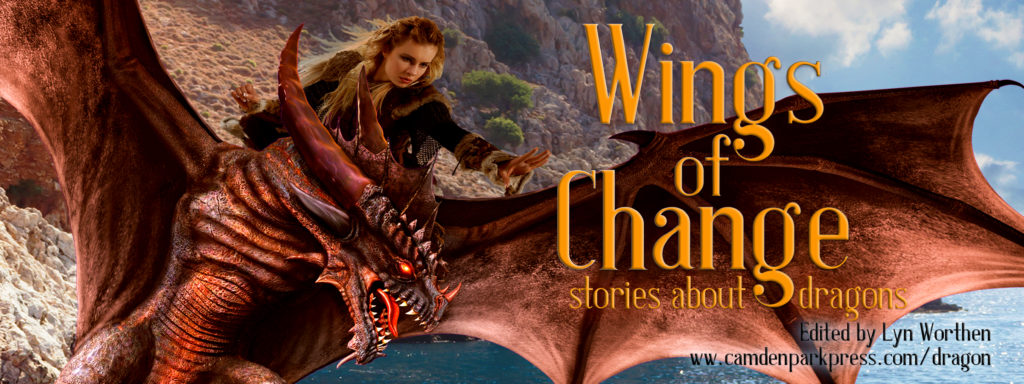
Tales of wise, ancient dragons hoarding treasure, terrorizing villages, and doing battle with noble heroes have long fascinated us. But dragons were not born old and wise, nor were heroes born brave and noble.Wings of Change gathers tales of young dragons growing into their scales and claws, and human youths making choices that shape their destinies – destinies that will be forever changed by their interaction with the dragons that share their world.
My story “Saffron Dragon” is about a blind Bangladeshi girl who discovers a dragon lives in her dreams. She must learn to both trust herself and the dragon to find her place in the world.
Throughout history there have always been people willing to risk and sacrifice to push forward in their fields. Some become renowned scientists and some help shape the understanding of millions through the words they write.
A big part of the message I want to share with the world is that anyone can be excellent in their chosen field if they are willing to work and sacrifice. The main characters in my books strongly believe this and are all at different points of this process.
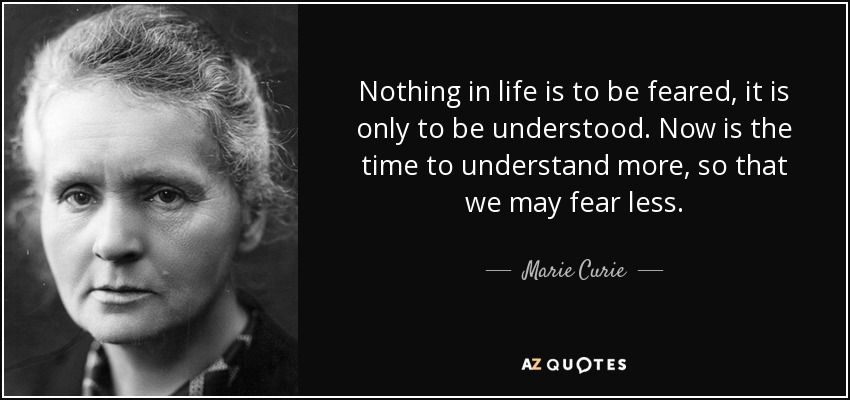
Which is why I want to share about scientific pioneer and two times Nobel Laureate, Marie Curie.
The Unstoppable Marie Curie
5 things you didn’t know about Marie Curie
1.
While most people know that Marie Curie was the first woman to win a Nobel Prize in 1903 for her discoveries of radioisotopes radium and polonium, did you know that she almost wasn’t mentioned? The award nomination originally only included her research partner and husband Pierre Curie and their contemporary Henri Becquerel.
2.
During World War 1, Marie Curie invented a mobile x-ray unit called a “Little Curie” installed it into “radiological cars” and trained 150 women to operate it. This mobile x-ray unit was critical to getting help to front line injuries and battlefield surgeons. Even more impressive, to further help the ware effort Curie learned to drive and operated her own “little Curie.” It is estimated that through her efforts the total number of soldiers who received x-rays during the war exceeded one million. This makes Marie Curie a War Hero.
3.
Einstein personally came to Curie’s defense. As is true with most ground breakers, Marie Curie experienced a whole host of scandal and controversy that criticized everything from her immigrant roots to her sex life. The situation got so bad that at one point she was counseled to not travel to Sweden to accept her second Nobel Prize. When Einstein learned of this he wrote her a wonderful letter where he encouraged her “to simply not read that hogwash, but rather leave it to the reptile for whom it has been fabricated.”
4.
Marie Curie’s daughter, Irene Joliot-Curie, won her own Noble Prize in 1935 for discovering a way to create artificial radioactive isotopes for use in medicine. Sadly, Marie died before the announcement was made in 1934.
5.
Marie Curie kept a sample of radium next to her bed to use as a night light.
“Nothing in life is to be feared, it is only to be understood. Now is the time to understand more, so that we may fear less. – Marie Curie
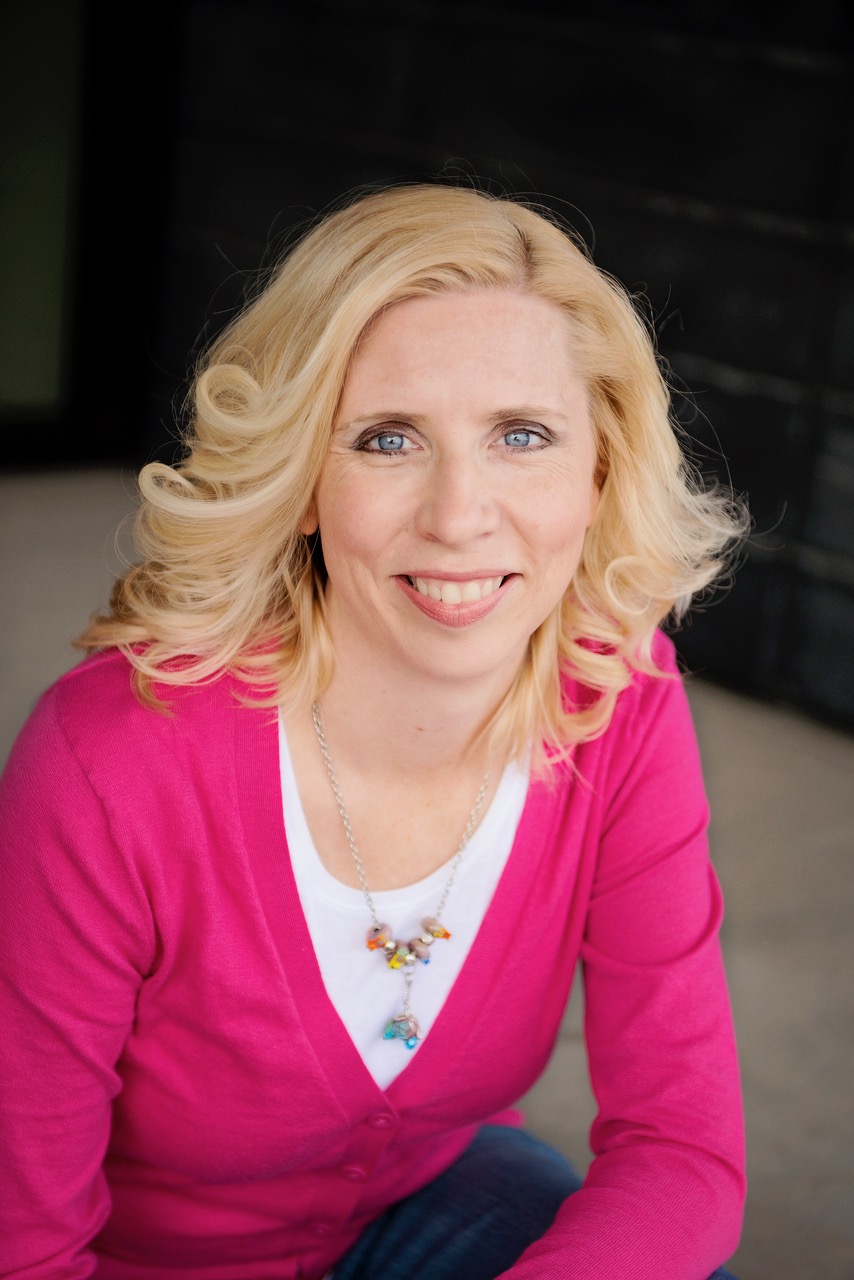
Today I’m thrilled to share a sneak peak into the world of fantasy writer Robin Glassey. Robin and I have known each other for years and she has been a wonderful cheerleader for local Utah authors. You can always spot her at events in her trademark bright pink shirts and sweaters.
What is the most important message you want your stories to teach?
I still remember what it was like to be a teen—that struggle for acceptance, that yearning to identify with a group, to feel loved. In The Azetha Series, Tika searches for love and acceptance outside of herself. Because of her mixed heritage, however, both the Human and Elven societies reject her. Only when she finally looks inward and accepts herself does she reach her full potential. The most important message I hope readers come away with is to love and accept themselves for who they are.
What was one of the most surprising things you learned in creating your books?
One of the most surprising things I learned as I wrote was how certain scenes continued to touch me emotionally as I reread them. It’s like when you have a favorite movie that you’ll watch for the 50th time and you can’t help but laugh or cry at the same spots. For me, it’s Pride and Prejudice with Keira Knightley. You know you’ve hit the right emotional notes when a character has you laughing or crying no matter how many times you read the same lines.
Who is your favorite character you’ve created, and why?
Eno is a talking lizard who first appears in The Veil of Death as Tika’s guide through an inescapable swamp. I love Eno because he’s flawed, and yet, completely lovable. Frankly, he’s the worst guide to have. He can’t shut up, he’ll abandon you at the first sign of trouble, and he’ll lead you in the wrong direction just for the sake of finding the tastiest bugs.
What projects are you currently working on?
I have several projects I’m working on but the one that’s closest to completion is a tips and tools book for writers with ADHD. This book will teach writers with ADHD how to increase their writing productivity and give them tips on how to complete more projects. Many of my fans have also expressed an interest in reading about some of the side characters from The Azetha Series. So, I’m working on telling the fire Elemental Neala’s story.
The always fabulous, and always pink, Robin Glassey
About Robin Glassey
Robin grew up in Eastern Canada in a small town across the bay from a leaky nuclear power plant, giving her the not so secret power of deactivating electronic devices. She moved to Utah in 1994 to attend BYU and fell hopelessly in love with Brett Glassey (despite his refusal to fall in love with BYU).
Robin graduated with a degree in Psychology and now spends her time analyzing her four teenage boys and writing clean YA fantasy. She’s addicted to Diet Coke, french fries, and Doctor Who. When all of her addictions collide at the same time, she’s in heaven.
Fans of Jeff Wheeler, Jennifer Neilson’s False Prince, Emily King, Michelle Madow, and Robert Jordan’s The Wheel of Time Series will enjoy this epic teen and young adult fantasy series about a princess who discovers the startling secret behind her heritage.
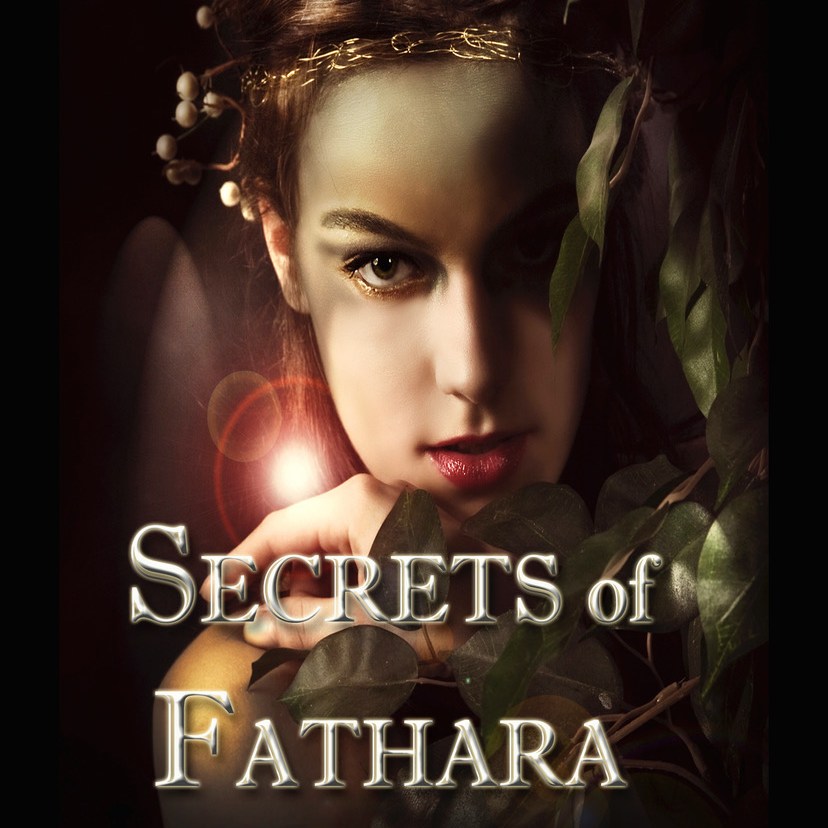
As a Rhodean princess, Tika is destined for nothing more than to dress in stuffy gowns, dance with stuffy princes, and attend stuffy events. But Tika isn’t like the other princesses on Fathara. With her wild hair, Elven-like ears, and her penchant for causing trouble, Tika does her best to escape her royal duties.
But when Tika discovers she’s more than Human, with surprising Elven and Elemental abilities, her life is turned upside down. With the truth about her heritage revealed, she’s forced to go on the run, hunted by a cunning sorcerer’s assassins and magical creatures.
Now the life Tika had so desperately wanted to escape she desperately wishes she could have back again.
Epic YA Fantasy author Robin Glassey transports readers to the magical land of Fathara where Death walks the land with a happy grin, having a conversation with the Intelligences is never a good thing, and where an encounter with a Sha’andari is hazardous to your health.
If you love epic YA fantasy, elemental, or princess series, then be sure to follow Tika’s full adventures in The Azetha Series.
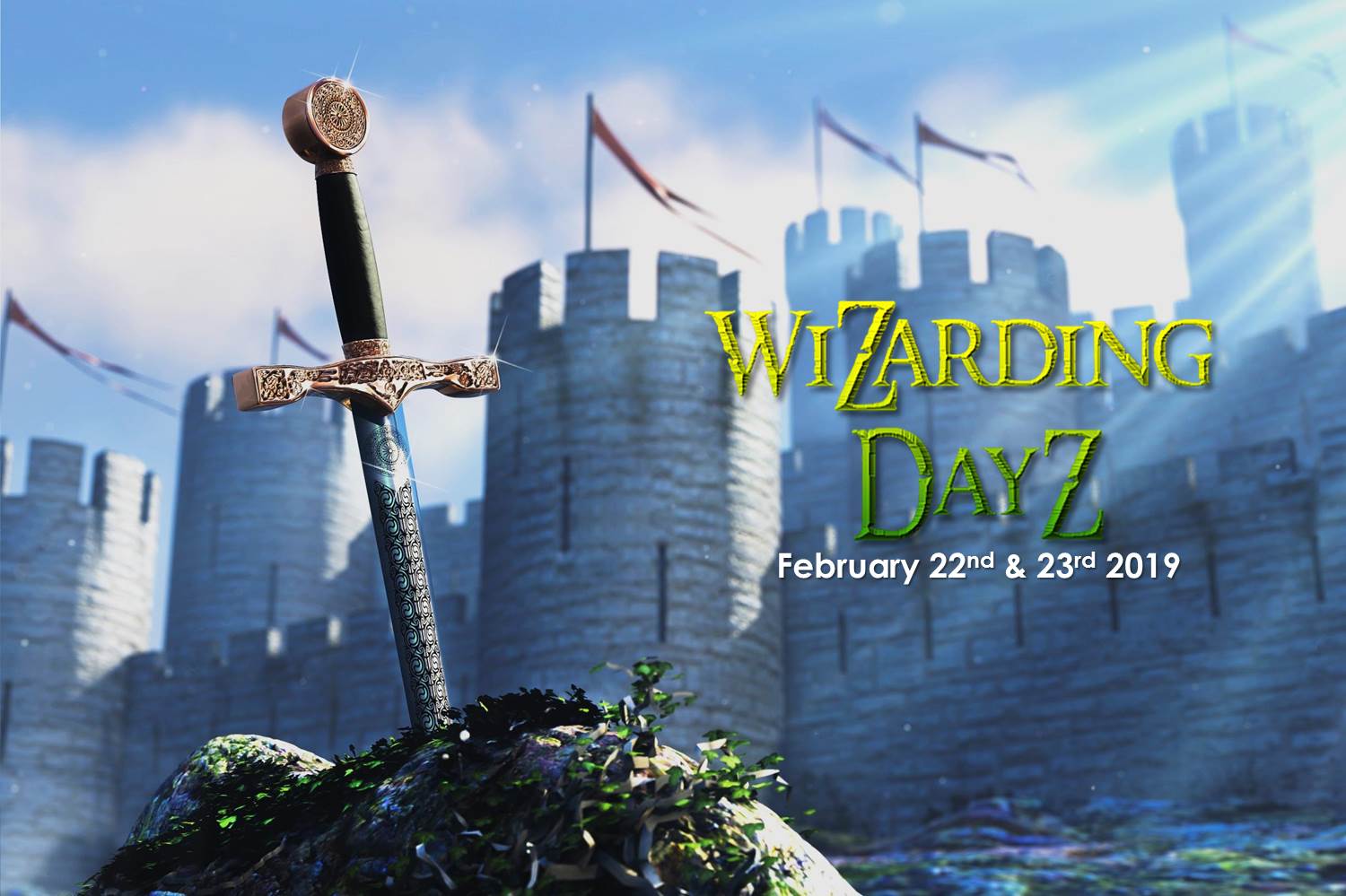
Heads up! There’s a fun event happening this weekend. Wizarding Dayz is a kid-friendly fantasy and science fiction event that celebrates all things magic. Come find me at the author tables!
***
You can also find updates and post notifications on Facebook, Twitter, and Instagram – chose the one you like the most!
Modern living tends to be complicated for most and downright chaotic for some. It’s easy to allow the sheer numbers of chores, to do lists, job responsibilities, social media, and hobbies become overwhelming.
Which is why I’ve chosen the word ‘simplify’ as one of my power words this year.
‘Simplify’ means to keep reminding myself that I can only do one thing at a time. Worrying about everything else needing to be done accomplishes nothing.
It means, while dozens of different things can fit in each day’s planner square, I can only do what I have time for.
It means choosing tasks that are important first and making progress or finishing them, then moving on.
It means not taking on new projects unless there is reasonable space in my schedule.
It means not obsessing over things that don’t matter and accepting that good and finished is much better than perfect and never done.
It means finding new ways to streamline processes to be more efficient and rewarding.
And finally, it means to make sure I’m doing the simple things to take care of me.
***
What does the word simplify meant to you in your life? I’d love to hear your thoughts!
***
Don’t miss it!
Stonebearer’s Betrayal received another amazing review over at Reading for Sanity: A Book Review Blog – go check it out!
Also, my article about my journey from writing hobbyist to author, “Never Settle, Never Give Up,” went live on the Always the Journey blog, run by Jason Woodland.
***
Thanks for joining us today! If you’d like to be notified of future posts, be sure to ‘subscribe’ using the handy links.
You can also find updates and post notifications on Facebook, Twitter, and Instagram – chose the one you like the most!
Artists and creatives, including writers, come in all different varieties. Some are organized. Some work fast. Some like to follow their muse all over the place. Some have unique rituals they follow. What we all have in common is a passion for creating our own unique form of art.
Holli Anderson, friend and Chief Editor at Immortal Works Press, is here to talk about what it’s like to be an author with a chaotic creative mindset, and to give us a tour of her creative space.
The talented and amazing Holli Anderson
Inside the Head of a Writer
By Holli Anderson
Hi! I’m so happy to be a guest here on Jodi’s blog! I’ll
start with a short introduction. My name is Holli Anderson, I write YA and MG
under this name that happens to be my real name. I write Adult Romantic
Suspense under the name H.L. Anderson – which is my real name using initials…
Besides being an author, I’m also a mom to four grown boys,
a grandma to a girl (who is nine and a half and can’t wait until she turns
eleven and receives her Hogwarts letter – because I am that awesome of a grandma) and a boy (age five, and whose sister
and I are indoctrinating into an HP lover as well), a wife to one man-boy, a
registered nurse, and Chief Editor of a small publishing company. The reason I
tell you all this is; it might help explain why my mind is in such continual
chaos.
Now, back to my head. My brain is always running a million
miles an hour in a gazillion different directions. It can sometimes be
difficult to grab an idea out of this pandemonium—that’s why I know, when I
latch onto an idea that shines brighter than the rest, it must be a GREAT idea.
That’s when the plethora of notebooks I keep hanging around come in handy,
they’re where I write these GREAT ideas down (moment of truth here: they aren’t
always GREAT ideas, sometimes they turn out to be GROAN-WORTHY ideas when I go
back and look at them later).
There have been times when I’ve been somewhere I can’t write
an idea down – like driving, or in the shower – during these times of immense
duress I have to resort to repeating the idea over and over in my mind until I
can get to where I can safely (and dryly) write it down. The book I’m working
on right now was one such GREAT idea. My husband knows this is what’s happening
when I burst through the door after work and show him the palm of my hand as I
frantically dig through my backpack to grab a notebook and pencil (yes
pencil—all GREAT ideas must be written in pencil).
(FYI—as I was writing the above paragraph a FOX ran down the
sidewalk across the street and partially into a neighbor’s yard before taking
off the way it had come. I had to run
outside to tell my husband and son, who are changing brakes on a car—and they didn’t believe me!)
This is getting a little longer than I had planned, but I
need to explain one more thing about this author’s head. EVERYTHING around me,
every trip to the store, every date with my husband, every walk around the
neighborhood—everything—can be turned into something to do with Harry Potter,
Supernatural, LOTR, or The Avengers. EVERTYTHING. Drives my husband crazy. How many
times he’s said to me, “You know that isn’t real, right?”
That’s when I mumble “Muggle” under my breath and continue
on.
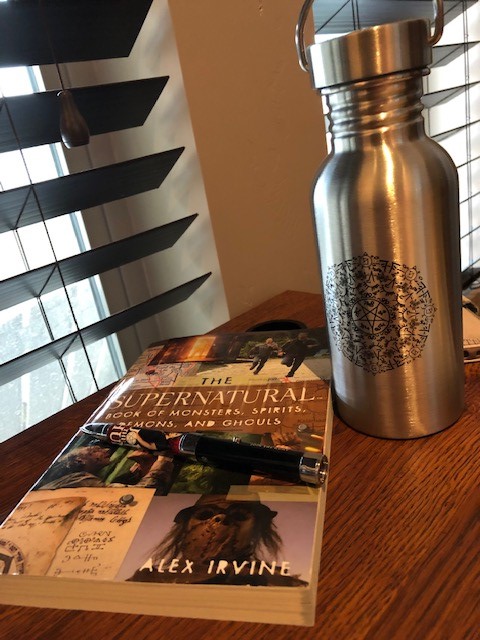
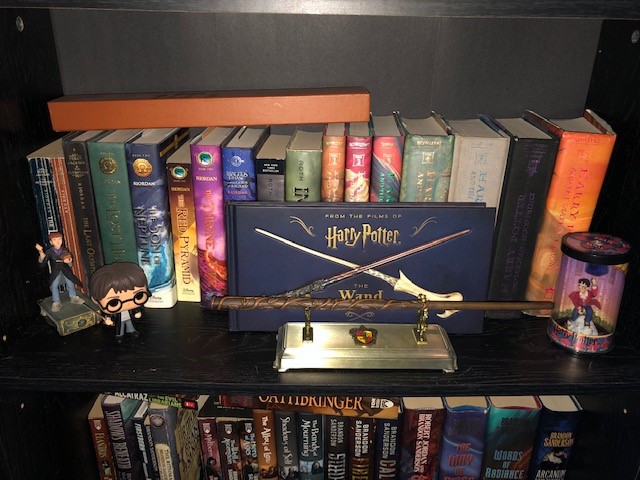
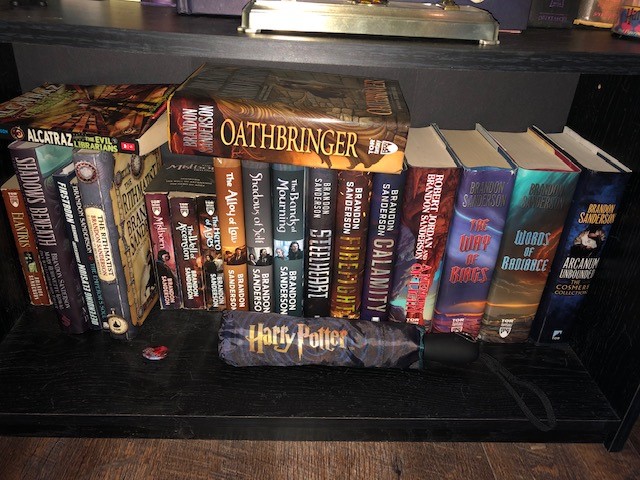
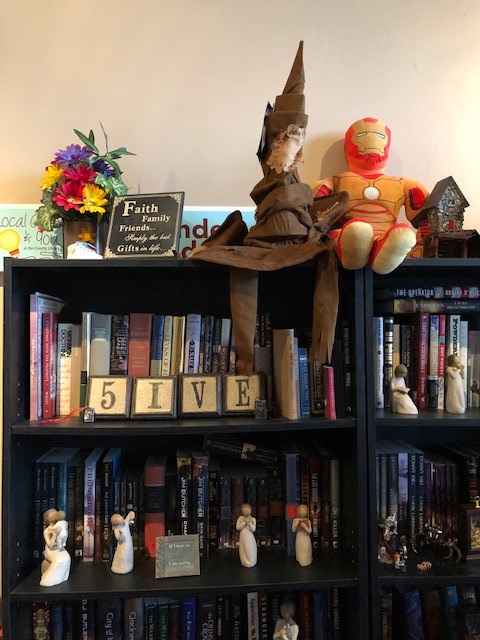
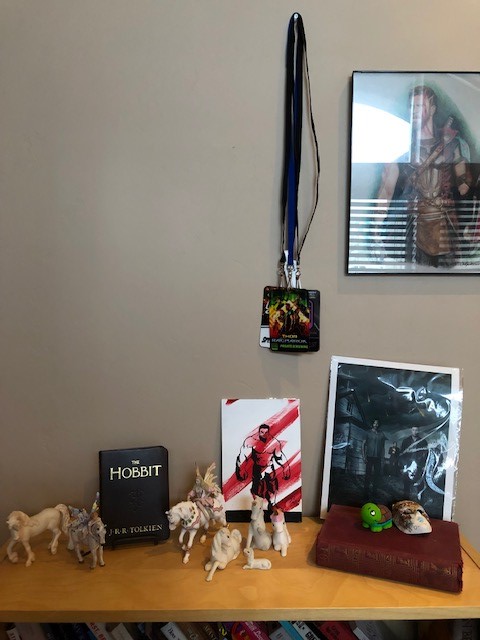
The pictures scattered throughout this blog are pictures of
my office/library. I think they help explain my head to you. This is the room
that calms me. Makes me smile. Helps me write. It’s my favorite room in the
house.
Oh, and, in case you want to check out the end result of all of this “chaotic thinking,” feel free to buy my newest release, a YA Superhero/Dystopian novel titled MYRIKAL. Here’s the Amazon link to make it easy: https://www.amazon.com/Myrikal-Holli-Anderson-ebook/dp/B07M6GKJ5J/

















 Jodi L. Milner, Author