
Careful where you click!

Admit it, you thought about clicking it, didn't you!

Admit it, you thought about clicking it, didn’t you!

The internet has tightly interwoven itself into the fabric of our lives. Many of us watched as it was born and embraced it as the greatest new thing ever, and in many ways it truly was. It still is.

The truth is, the internet is a dicey place. Casual browsing can lead to all sorts of weird and wonderful places. However, you have to be smart on how you browse. Today, I was looking for new fantasy art to perhaps feature here in the future. I clicked on an image from an unfamiliar site and my computer freaked out – or at least pretended to. It locked down the pages, I couldn’t exit my browser, and a recorded message began playing over and over. Irritating as hell.

The voice kept telling me in broken English that my computer was infected with something horrible, but if I called the convenient number on the screen they would be able to help.

Yea…right.  Not falling for it. I’ve seen this scam before.

Had I been less PC savvy, this would have been a big deal. Good thing I have a few tricks of my own. I opened the task manager and killed the browser. Boom! Problem solved.

In many ways the internet is like a big city. When you stick to familiar, well-known places and know the address you’ll arrive safely.  However, if you are cruising around looking for a good time, you are asking for trouble. Mindless browsing and following click-bait will lead you to dark alleys where people are waiting to steal your wallet. And on the internet they can disguise themselves in super-appealing, non-threatening ways that you wouldn’t expect.

Protect yourself. No one is going to do it for you. It is your responsibility to know what’s safe and what’s a bad idea.

Be smart with passwords. Don’t give them to anyone – especially anyone you don’t know online. DUH.

Install an ad blocker so you don’t see most of the garbage that is being thrown at you. If you can’t see it then you won’t be tempted to pick up any of the shiny bits.

Don’t download ANYTHING unless you searched for it yourself and are at a reputable site. Even then, after the download is complete run a scan before starting the program.

Be smart. Question everything. If something seems too good to be true, it is.

And if by some innocent mistake, someone starts talking to you and asks you to call them to fix your computer. DON’T DO IT.

You’ll thank me later.

***

Have a story about the internet gone wild? Share it in the comments below!

Magical Places, Tree Cathdral, Bergamo

The Fantasy in Real Life series is dedicated to showcasing the weird and wonderful creations and natural phenomenon that occur around the world. This week we visit Bergamo, a city in Lombardy, Italy. Located just 25 miles northeast of Milan, Bergamo can be considered part of the greater Milan metropolitan area. To the north are the foothills of the Bergamo Alps.

As an ancient city, there are plenty of cathedrals and other examples of medieval architecture in Bergamo, but today we are going to focus on something new.

image
Pava, CC BY-SA 3.0 IT https://creativecommons.org/licenses/by-sa/3.0/it/deed.en, via Wikimedia Commons

The tree cathedral was the brain child of Italian artist, Giuliano Mauri, and is touted as one of the world’s most impressive examples of organic architecture. A lover of nature, Mauri created the original plans in 2001. Sadly, he died in 2009 before the work could be realized.

In 2010, the International Year of Biodiversity, Mauri’s plans were put into action as a tribute to his life’s work. 42 beech trees were planted to form a basilica of five aisles will grow into the supporting columns. These beeches are supported by fir poles and branches of hazelnut and chestnut that have been woven together. These will be allowed to deteriorate as the beech trees grow larger. 

Additional resources and articles about the Tree Cathedral:

Book of the Month – The Ocean at the End of the Lane by Neil Gaiman

Ocean_at_the_End_of_the_Lane_US_Cover

When an author’s name keeps coming up over and over, at book clubs, at conferences, at critique groups, you know there is something special about what they create. Neil Gaiman is one of those authors. This month I explored his book, The Ocean at the End of the Lane.

In this book, an unnamed middle-aged man returns to his childhood neighborhood and finds a mysterious draw to visit an old friend’s house. While he is there he remembers a strange event that happened when he was a boy.

Short on cash, the narrator’s family rents out his bedroom and he must share a room with his younger sister. One of their renters commits suicide in the family car. His death allows a supernatural being to enter the world and strange things start happening.

The narrator goes to his friend Lettie Hempstock’s house at the end of the lane for help. Lettie agrees to help and takes the narrator with her to bind the supernatural spirit back into her own world. In the process, the being sticks the narrator in the foot and anchors a pathway back to the human world in him.

The being returns in the form of the caretaker, Ursula Monkton, that the narrator’s family has hired so that the mother can return to work, proving that the most terrible of terrors is the one that is hiding in your own home and no one believes you about. Ursula is manipulative and soon bends the family into loving her, everyone except the narrator, who she turns the family against.

With the Hempstock’s help, the narrator is able to defeat the villanous Ursula, but it comes at great price. To save the narrator the pain of remembering they alter his memories so that the event is more like a dream that quickly fades.

Every few years he returns to visit, and every few years he is allowed to remember the experience once more only to forget once again the moment he walks away from the house.

There is, of course, much more to the story than this. If you want a more complete synopsis you are welcome to go visit the wiki page.

My Review:

There is a reason that so many people talk about Neil Gaiman’s work, especially around writing circles. He has a talent with language that makes the prose flow beautifully across the page. The ideas that he chooses to weave into each story are unique and intriguing and make the reader question their own realities.

Gaiman’s books are short, making them easy to start and finish in a long evening. Which is a good thing because once you pick one up you won’t want to put it down.

I loved the Ocean at the End of the Lane and can’t wait to pick up another of Gaiman’s books. I recommend this title to those who love well written prose, good vs. evil, and practical magic. Those who don’t like magic, even in small, easy to digest portions, might not like this book.

Writing Fresh

If your writing isn't as fresh as this orange, you better read this.

If your writing isn’t as fresh as this orange you better read this.

It’s writing Wednesday and today we are going to talk about writing fresh. Each writing conference I attend teaches me something new and sometimes these lessons profoundly change the way I think about writing. At this month’s LDStorymakers writing conference one of the most influential lessons I took to heart was also one of the simplest.

Write Fresh.

This idea was discussed by several presenters including the evening keynote Martine Leavitt. She spoke about her writing journey and how at times her life was so hectic that often her writing goal for the day was to write one perfect sentence that had never been written before.

Margie Lawson shared the same idea in her deep editing intensive workshops. She added ideas about how to use enhanced description and literary devices to keep the writing alive and also to make a greater emotional impact.

Both spoke at length about creating ideas and thoughts that hadn’t been seen before, about writing fresh.

The best way to learn about it is to try it. Let’s take a bland example and see if we can freshen it up a bit.

“Blake faced the gate and waited for the guard to let him through. He hated this place. It was ugly and smelled. If it wasn’t for the old crone, he wouldn’t bother coming. Somewhere in her addled head, she held the last clue to the resting place of his father.”

This example doesn’t let us feel what Blake is feeling, it simply tells us he hates the place. We know why he’s there, he is seeking his father’s body, but we don’t really care. Descriptions are minimal. We know he thinks the old crone is crazy, but that’s about it.

Let’s take the phrase “He hated the place” and let it sing. This seems like a perfect place to add a splash of backstory.

“Blake faced the gate and waited for the guard to let him through. The king’s dungeon brought back memories of dark nights in a cell not knowing whether he would live to see the sun. It was ugly and smelled. If it wasn’t for the old crone, he wouldn’t bother coming. Somewhere in her addled head, she held the last clue to the resting place of his father.”

Now the phrase “It was ugly and smelled” feels even more awkward and out of place. Not to mention that it gives the reader nothing to imagine. Let’s fix that. I think an alliteration would be nice here.

“Blake faced the gate and waited for the guard to let him through. The king’s dungeon brought back memories of dark nights in a cell not knowing whether he would live to see the sun. The smell of sweat and suffering oozed from the iron grates set in the ground. If it wasn’t for the old crone, he wouldn’t bother coming. Somewhere in her addled head, she held the last clue to the resting place of his father.”

I’m not crazy about the first sentence. If this was the opening page of a book I’d want it to have a stronger hook. It should instantly make the reader start asking questions.  I think the best way to handle this is to mix up some of the ideas of the first two sentences. Also, this would be a good place to add some sort of internal reaction.

“Blake faced the gate that led to the king’s dungeon and waited for the guard to let him through. The sight made him shiver and brought back memories of dark nights in a cell not knowing whether he would live to see the sun. The smell of sweat and suffering oozed from the iron grates set in the ground. If it wasn’t for the old crone, he wouldn’t bother coming. Somewhere in her addled head, she held the last clue to the resting place of his father.”

Only thirty-six words were added to change the somewhat dry original text to something far more interesting. Is it the most perfect example of adding fresh ideas? Nope. I’m not perfect and I pulled this example from the air. You could probably do much better.

In fact…

If you were to edit this text how would you have done it? What would you change first? What would you add? Let’s talk about it in the comments!

Keep it fresh people, and as always,

Happy Writing!

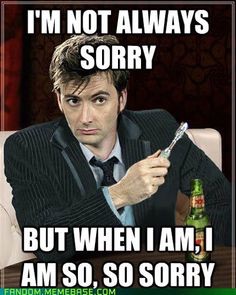
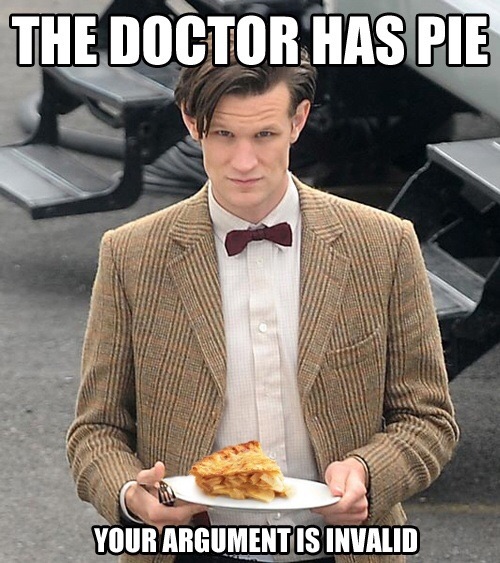
My Gift to you – Memes with the Doctor

Happy Memorial Day weekend! If you are reading this I hope it is while you are driving somewhere fabulous and are desparate for some entertainment. I take that back, don’t do anything on your smartphone whiile driving. However, should you be a passenger in a car driving some intolerable distance here is some much needed entertainment, enjoy!

Ok, I admit, I would have liked to have a few more of these, but I, myself, am trapped in a car driving an intolerable distance with my whole darling family. These make me happy.

image

image

image

Writing Fantasy Profanity

Bantha-ST

Don’t mix up your Bantha Poodoo with your Nerf Herders! Getting swearing right is important.

It’s writer Wednesday and today we are going to delve into the risque topic of fantasy profanity. Well, ok, it’s not all that risque. In fact, the reason many people like fantasy novels is that there is rarely ever any swearing.

Instead, we enter the world of alternate swearing. In a fantasy world there are different beliefs and different cultural practices that lead to different terms being considered profane, just like different English speaking countries have distinct swear words. Saying ‘bollocks’ or ‘bloody’ in the US barely gets an eyebrow raise because most people don’t know what they mean.

Using standard swearing in a fantasy novel doesn’t make sense because you wouldn’t expect an alternate civilization to develop the same swear words. When they are used they pull the reader from the narrative – a big NO NO.

Let’s see how these titles handle swearing –

Mazerunner, James Dashner: (I’m talking about the book, not the movie) The Gladers those who live withing the maze use ‘shuck’ and ‘clunk’ ans their stronger swears.

  • Clunk is a direct replacement for sh%t and comes directly from the sound made when using the rustic bathroom – and yes, this is explained in the book.
  • Shuck rhymes with fu%k for a reason.
  • Other slang includes: shank, slim it, slinthead, greenbean, jacked, and bloody.

Wheel of Time, Robert Jordan and Brandon Sanderson: There are a plethora of these, for the complete list, check out the wiki. These words are tied directly to the world where much of the protagonists history includes blood, fire, and magic. The most popular swear words are the following:

  • Flaming used much like we use ‘damn’ and expresses anger or hatred toward something or someone.
  • Blasted a slightly stronger version of ‘flaming’
  • Light used as an exclamation similar to how we use ‘god’
  • Burn (me, you, etc) is also similiar to damn and is used when people are upset
  • Blood and Ashes expresses anger and disgust.

Star Wars Universe: While this is sci/fi the same rules apply – it’s not our world or culture so the swear words would be different. I was actually surprised at how many of these there are, for a complete run down, including origins and definitions, check out this article.

  • F-bomb substitutes: crink/crinking, farkled. kark/karking, kriff/kriffing, krong, Skrog/skrogging, snark/snarking (no relation to today’s snarky).
  • S-word substitutes: druk, dwang, Holy Sith!, shab, shavit.
  • Other Insults: Bantha poodoo, e chu ta, hutt-spawn, laserbrain/blaster brain, lurdo, nerf herder, schutta, sculag, sleemo, son of a blaster, stoopa, vong.

Needless to say, there are many ways to handle swearing in your world.  The more deeply embedded into the culture and world, the better these insults will be.  If your world has a lot of water elements then there should be some water related swearing and insults, wethead, salt and slime, salty, bilge, etc. A desert culture would use a different set that evoked images of heat, dry, and stench.

Whatever you do, make it meaningful. Random words used as swear words won’t affect your reader nearly as much as words that have a history and a purpose.

Happy Writing!

LDStorymakers in Review

11244904_10205537467848961_7298393372357348081_nI survived the writing conference. I know it was a good one because I didn’t want to leave and return to real life, which is my litmus test of choice when evaluating an event. While I can wish all I want for more, that would be selfish. There are little monsters angel babies at home that miss their momma.

Of all the conferences I’ve attended, this one comes close to being the best. Local writing celebrities and NYT Bestsellers came and taught some of their delicious trade secrets, including James Dashner, author of the Mazerunner series; J Scott Savage, author of the FarWorld series; Brandon Mull, author of the Fablehaven series; and several more.

By far the most influential class I attended was a two-hour intensive by the effervescent and talented Margie Lawson, a psychiatrist by trade, and a guru of teaching the art of making mundane prose sing. She made a personal study of the best books out there and boiled out the different literary devices that made the reader feel that much desired emotional punch. Then she shared those juicy tidbits with us!

The two keynotes were from celebrated authors Anne Perry and Martine Leavitt who both emphasized the importance of perseverance and also spoke about how writing is a gift to the writer. Both addresses fed and enriched the audience.

Perhaps the most important part of any conference is the feeling of being with your tribe. Fellow writers and geeks are my tribe and being able to spend a weekend with hundreds of them is the equivalent of gassing up the motivational tank. They share the same struggles and frustrations as I do as well as the joys. They know exactly what a big deal it is for a publisher to request a full, they know what a crushing defeat it is to receive a rejection. They understand how to talk about stories and characters in a deep meaningful way.  They make it hard to come back to the real world where the people around you don’t.

With these new tools under my belt, and my tank full, I’m hoping to embark on a new level of writing and find even more joy and success in doing so. That is if my little angel baby (who is currently bashing his head against my leg) will permit me to do so.

Live From LDStorymakers

r6_9O8_R_400x400

This weekend is the annual LDStorymakers Writers Conference in Utah and writers from around the midwest and further have congregated in brute force. Over 600 of us are milling around the Utah Valley Convention Center attending lectures and intensive workshops to improve our craft.

Last night I attended a Publication Primer workshop, which is six hours of combing through the first 10 pages of  the manuscripts of the members of your table finding ways to make prose stronger (and more likely to be picked up by an agent or publisher). My table was moderated by the talented Amy Winehouse of Eschler Editing.

I’ve already brushed shoulders with writing super star and NY Time Bestseller David Farland, we shared an elevator on the way out.

Should you happen to be at the conference come find me and say hi! I’ll be wearing a grey fedora.

Expect a full report on Monday!

I’m looking forward to the rest of the weekend and will give a full report on Monday.

Writing Exercise: The KISS Principle

It’s Writer Wednesday here at the blog and today we are going to discuss the KISS principle.

KISS stands for Keep It Simple, Stupid.

I’m not calling any of you dear readers stupid, rest assured. Only the smartest of readers and writers end up here. The KISS acronym has been around since the 1960’s when it was used as a design principle in the US Navy.

Some have morphed the acronym to these more suitable alternatives –

  • Keep It Short and Simple
  • Keep It Small and Simple
  • Keep It Simple and Straightforward

Choose the one that works best for you.

A handful of writers fall into the “If it’s complicated, it’s better”  category, thinking that if a plot has twists and surprise reveals on every other page then it must be an awesome read. Yes, there are readers out there that love a book like this. There are also readers who seek out My Little Pony Fan Fiction. Different strokes for different folks people.

The point is, a complicated twisted plot line that’s hard to understand and hard to follow is going to be a hard book to read and recommend.

Today’s exercise is the following:

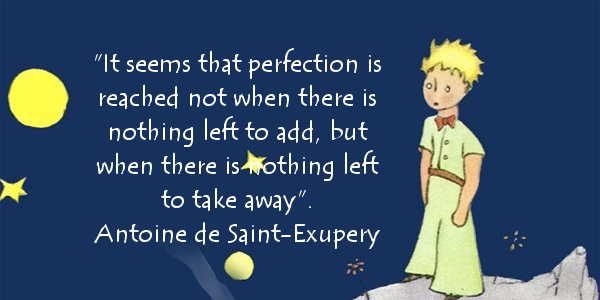
Take a complex and confusing scene and remove three elements that are not necessary to furthering the plot.

Here’s a touch of inspiration for you:

The_Little_Prince_meme

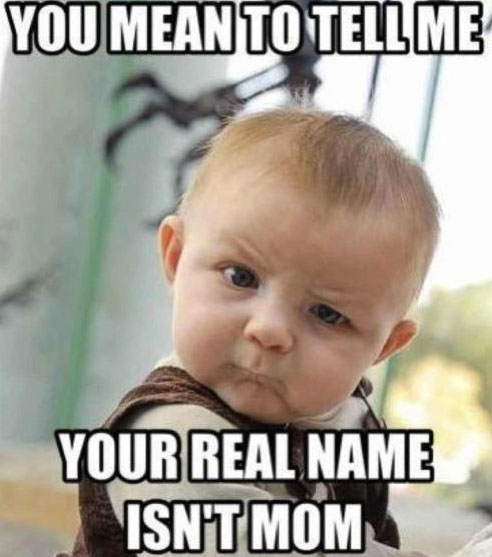
5 Favorite Mother’s Day Memes

In honor of Mother’s Day (and because it’s easy and my kids are still off track on the year-round schedule) here are a collection of humorous and amusing Mother’s Day memes.

Enjoy!

oh-its-mothers-day-tell-me-all-about-how-nice-you-treat-your-mom-one-day-a-year

o-FUNNIEST-SOMEECARDS-570

funny-mothers-day-pictures

MEME-MD-5g3w4uxv9

Have a favorite? Share in the comments below!

Want to brighten a Mom’s day? Send this their way!