Movie of the Month: The Hobbit, Battle of the Five Armies

I’m ashamed to say that I’ve put off seeing the last installment of the Hobbit trilogy. It’s not that I didn’t want to see it, but I was disappointed with the first two and so when the third finally rolled around  the excitement simply wasn’t there to rush out and see it.

the-hobbit-the-battle-of-the-five-armies_images

Most Lord of the Rings fans agree that turning the Hobbit into a trilogy was a huge mistake on the part of the lovely people at New Line Studios. The book of the Hobbit is tiny and the choice to turn it into an 8+ hour-long saga was purely a marketing decision. They thought it would bring in the same huge crowds and mania that LOTR did.

It might have worked, had the world of Middle Earth been new.

Because we are all very familiar with the sights and spectacle of Middle Earth it doesn’t hold our attention as long. That, and there simply no epic setting reveals like there were in LOTR. In LOTR there was the introduction of Hobbiton, Lothlorien, Rivendale, Gondor, and the halls of Moria, to name a few. These settings were dramatic and beautiful and captured the imagination. In Hobbit there really isn’t anything that can rival them. The halls of Thranduil don’t quite measure up to the other Elven realms and the the Dwarvish interiors of the lonely mountain are not as impressive as what we saw before in Moria.

Which brings us to the story. Because the Hobbit was a short book, and one of the rare instances where it would actually be faster to read the book than to see the movies, lots of extra material had to be added to flesh out the story. Much of this material is pulled from Tolkien’s supplemental material and stays true to the history and cultures of Middle Earth, and to that effect makes the Hobbit an enjoyable movie to anyone who is a fan of Tolkien’s works.

However, for those who need a movie that doesn’t drag along through lengthy exposition and introductions, the Hobbit was a bit of a chore to watch. Much of the scenes that were supposed to create sympathy for lead characters ended up being forced and well, boring.

hobbit-poster

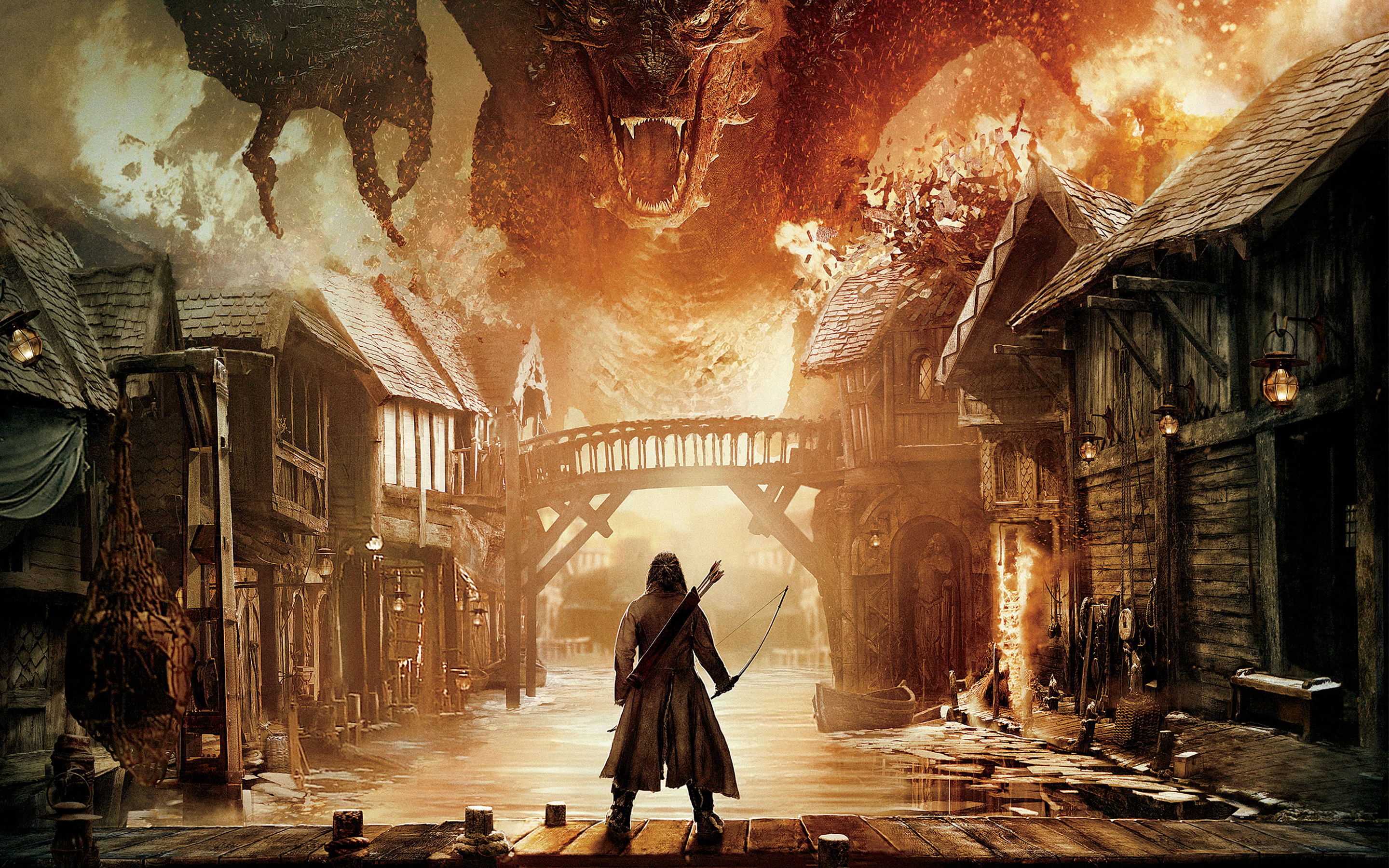
As for the final chapter of the Hobbit, it has its fair share of thrills and spills and emotionally charged material. We finally see the defeat of the dragon, but with it comes the near downfall of Thorin, the Dwarvish king. With Smaug out of the way, Thorin can take the lonely mountain throne at last, and with it, its massive trove of dragon gold. Dragon gold brings with it intense greed and paranoia which infects Thorin, turning him against his kin.

The mountain hold and it’s treasure attract the armies all fighting for what they believe they are entitled to. Men, elves, orcs, dwarves, and eagles all join in the fight. Thorin, with the help of Bilbo and his kin, is reminded what is really important and leads the charge against the orcs. The fight doesn’t go well, there are heavy losses on all sides. Thranduil hates that elvish blood is being spilled for what he deems a fruitless endeavor. Bard, the reluctant leader of men, does his best to protect his people. In the end it’s the dwarves who pay the heaviest price.

In a scene much like when Boromir dies in LOTR, Thorin pays for the victory against the Orc general, Azog, by sacrificing himself. The movie ends on a bittersweet note where the good guys win but we ask ourselves, was it worth it?
the_hobbit_the_battle_of_the_five_armies-wide

After everything, I give the last installment of the Hobbit a 6 out of 10. I liked it, it was enjoyable, but in the end it didn’t quite meet my expectations. It moved slowly, many of the emotional scenes felt forced, and in the end we didn’t get our happy ending.

Did you see The Hobbit? What did you think? Let me know in the comments.

All images are used here under Fair Use for discussion, review, and educational commentary. They belong to their respective copyright owners.
Writer Wednesday: Hanging Flags

It’s Wednesday and that means a special post for all you writers out there. Woohoo!

Lately I’ve been enjoying the wit of comedian Jim Gaffigan. He’s clean and several of his routines are on Netflix, which is a double bonus for those like me that need something funny to unwind to after a long day and can’t exactly head out to a club. Babysitters are expensive.

Once of Jim’s signature elements in his routine is that he will insert his own criticisms into the flow of the joke. You know it’s coming because he turns to the side and impersonates a generic grandma from the audience, I imagine his mother. It is these asides that make his routines unique and even funnier than if he did a straight up routine. It is also a brilliant way to draw more attention to the joke itself and make it even funnier.

While watching, it got me thinking about using “flags” to point out things in a story that are either out of character or perhaps a little strange for your world.  It’s for when you break one of your own rules in your world, you need to “hang a flag” on it to ensure your reader knows that you are aware you just broke one of your own rules.

I’m not talking about the laws of the land. When we hang flags it’s more to show a break from the normal for that world or that character. Say your character always orders a cheeseburger when they go out and then out of the blue gets the chicken sandwich. That would merit a flag, something should be said to explain the break in the norm. Maybe he’s going through a break up and they ate cheeseburgers on their first date. Maybe he’s found out that his cholesterol is out of control. Maybe the last time he ate a cheeseburger he found a dirty band-aid under the patty.

If we didn’t say something about the change in the norm we’d be missing out on giving that character a little extra depth.

Flagging is for intentional rule breaks. If a rule is set in a world and unintentionally broken it needs to be fixed. Often it is a way to inject humor or to push a plot point in a different direction.

The moral of the story is that if you are going to have rules in your world or for your characters and you find that you have to break those rules, you have to either point it out or fix it.

Happy Writing!

May the Fourth be With You

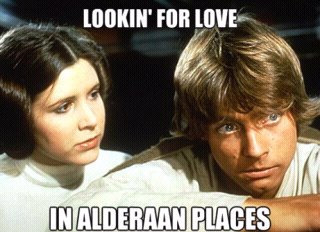
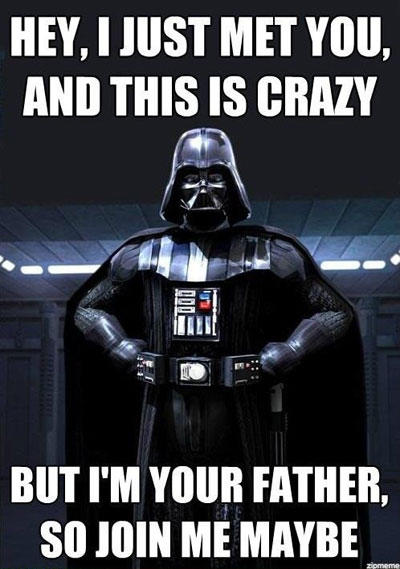
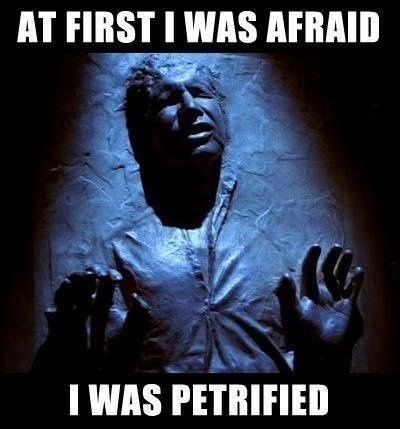
It’s May 4th and to all those Star Wars fans out there that’s a cause for celebration. To celebrate here, I’m sharing some of my favorite Star Wars memes!

star-wars-meme-vader-call-mei-was-petrified

Star-Wars-MEME_thumb

star-wars-memes-16b42bdda0

Have a favorite that I missed? Add it in the comments!

Writing Update – May 2015

It’s been a few months since I’ve posted an update so here we are.  I’m excited to say that I finally finished the current draft of my epic fantasy, Stonebearer’s Betrayal. This draft has been long in coming, over a year, and it feels so good to finally be seeing a finished product.

The next step is to put the final polish on the chapters and send them off to a few trusted beta readers. I have to be honest, it’s been a long time since I’ve let anyone see anything more than a scene or two and I’m a little scared about the feedback I might get. At the same time, it’s super exciting to know that I’ve gotten this far.

I did sneak in a little short fiction writing for a contest that one of my local writing groups hosted. I’m proud to say that my flash fiction piece, This is my Destiny, won first place in its category.  I wanted to try my hand at a historical fiction piece with a speculative fiction twist for another anthology but it didn’t come together. There are a few other deadlines in the future that I’d like to prepare pieces for, but for the most part I think I will focus on my novel.

LUWOC first chapt 2015 certThe next big thing is the LDStorymakers Conference in two weeks. I have a chapter entered in to the first chapter contest, which again scares the crap out of me. I’d love to win, validation is always a good thing. I will also attend the intense Publication Primer where a professional editor will ream my first 10 pages to shreds along with the other four people in my group. It’s the best way to grow as a writer, but man it can be rough. It takes thick skin and lots of perspective to be able to not take things personally.

Hopefully by the next update in a few months I’ll have my initial beta feedback on my novel and will be well into the final editing process and then  – gasp! – it’s time to start sending it out! EEEK!

Until then, happy reading!

Grammarland: Then vs Than

It’s Writer Wednesday here and today we will tackle a mini grammar concept – the difference between then and than. These writing-themed posts used to be the weekly mainstay of my other blog, My Literary Quest, but will now be hosted here and reblogged there.

Then can be used as three different parts of speech, which is probably why it gets mixed up so often with than. The main use of then is as an adverb, specifically to situate an action in time. For example,  she attended English class and then went to lunch. It’s also part of the if … then construction –If you clean your room, then I will tell you my secret.

Then can also be used as a noun meaning that time. (e.g., “I wanted to scream, but then was not the time.” To me this sounds a bit clunky and dated, but it’s a valid use.

The last use of then is as an adjective, meaning at that time. This usage is the most awkward of all, but I have seen it used at times. Her then apartment was full of ants.

Of note – both of the last two uses of then are passive voice. If you catch yourself using them in fiction you might want to carefully consider if that’s your best option.

Everyone still following along? Great! Moving on to than.

Than is a conjunction used for making a comparison. That is it. That is it’s only use. In fact, than is so unique that you can’t swap it out of a sentence. (e.g., “She’d rather have butter than cream cheese.”)

Pop quiz! Write down your answers and see how you do.

  1. There is nothing better (then/than) choosing to “like” this post.
  2. If you can breathe, (then/than) you can share this blog with a friend.
  3. The (then/than) Prime Minister of the UK would like this blog because it talks about Doctor Who from time to time.
  4. Read the post first, (then/than) leave a brilliant comment.
  5. I personally would rather be eating chocolate (then/than) taking a silly grammar quiz.
  6. If you would like to go sneak some chocolate (then/than) go do it, I won’t judge.

Here are the answers:

1. than 2. then 3. then 4. then 5. than 6. then

Get all six right? Woohoo! You are a grammar ninja! Didn’t? It’s ok, try and try again!

Keep up the good work and as always –

Happy Writing!

Helpful links:

Want to see more Grammarland posts? Check out the whole collection at this link!

5 Free Spring Wallpapers just for you!

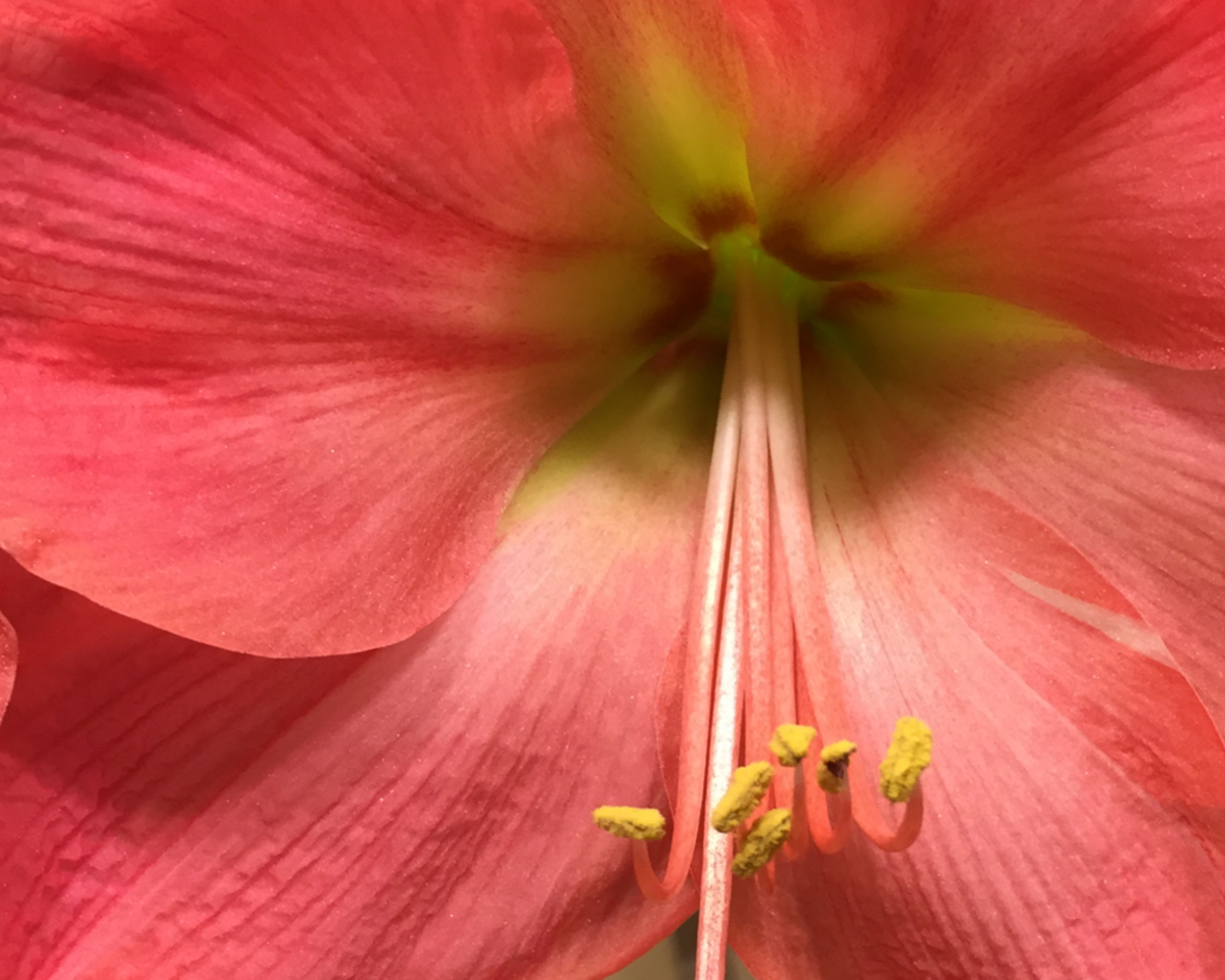
Spring is one of my favorite times and I couldn’t help but snap a few pictures to share with you! They are all 1280X1024 and perfect for a desktop wallpaper.

Enjoy!

spring flowers

Lilacs

Lily

morning tulipphlox

Book of the Month: Everneath by Brodi Ashton

9413044

This month’s book, Everneath, comes from fellow Utah native Brodi Ashton and is the first in the Everneath series.

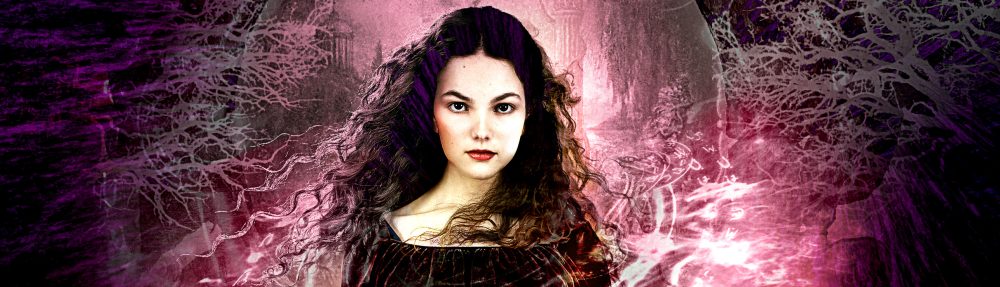
Twilight fans rejoice! I have found a perfect novel for you. It is loaded with teenage angst, and I mean ANGST. The main character, Nikki Beckett, is in high school when her mother is tragically killed by a drunk driver. Her resulting depression, paired by the belief that her boyfriend has cheated on her, drives her into the lethal clutches of Cole, an Everliving.

Every 100 years the Everliving must feed on the energies of a human host and then that host falls prey to the tunnels, a hellish place where the host is drained of all emotions until they cease to exist. The feed takes 100 years, but in the alternate space of the Everneath time works differently so only six months pass on the surface. The host can choose return to the surface for six months before the tunnels claim them, that is if they can remember any of their life before. Most don’t.

Nikki is an exception. Not only does she survive the feed without aging, she remembers Jack, her boyfriend, and is compelled to return to him. She now has six months to reclaim her life before the tunnels come for her once again. Paired with Jack, she must find a way to survive, and even thrive.

As I said before, this book is perfect for all those Twilight fans out there. There is a supernatural element in Cole, however instead of being a traditional vampire, Cole is what many would call a psychic vampire.  He feeds on the energy and emotions of those around him. There is a troubled love triangle between Cole, Nikki, and Jack, not unlike Jacob, Edward, and Bella. There is a lot of high school drama and as a perk there are nice mythological elements and nods to the myths of Persephone and Eurydice.

However, like all books, there are elements in Everneath that might drive readers crazy. Nikki is very similar to Bella, she’s very passive and has a very simple character arc. Her recurring debate is whether to go with Cole and become his queen in the Everneath and have to engage indirectly in his vampire-y ways, or to let the hellish tunnels come and eat her soul. She spends most of the book flip-flopping between the two choices, that is when she isn’t flip-flopping between Jack and Cole.  Jack is the leading quarterback and football prodigy, a personal pet peeve of mine and many readers like me.  Why does the romantic lead always have to be the quarterback? Stereotypes people! Another stereotype is found in the trampy cheerleader who tries to destroy Nikki and Jack’s relationship. Oh, and did I mention that Nikki is devastatingly attractive? Thankfully, she’s not also a cheerleader.

I recommend this book for teenage girls who like a good angst-y story of love and loss. If that’s not you, read at your own risk.

Writer Wednesday: Magical Realism

Welcome to writer Wednesday! Here we will tackle topics of interest to fellow writers and hopefully be interesting to readers of fiction. These posts used to be written over at My Literary Quest but now will be featured here and reblogged there.

Today we will discuss the literary genre, magical realism.

Although it feels like the term “Magical Realism” is fairly new, it has actually been around since the 1920s. As a fantasy writer myself, I wanted to explore this term to better understand it.

The idea of magical realism sprang up first from a German art critic, Franz Roh, who used it to describe art that pushed beyond the surreal, creating intriguing, thought provoking works. This art was known for it’s photographic clarity and focused on the magical nature of the real world.

This art inspired writers to find the same feeling in their works. They aimed to capture the fantastic, mysterious nature of reality. These writers carried these ideas over to Hispanic America where it was embraced and began to evolve. The term “marvelous realism” was born and described works that presented a realistic and pragmatic view of reality that includes an acceptance of the existence of magic and superstition. This is closer to how we define magical realism today.

The 1955 essay by critic Angel Flores titled, “Magical Realism in Spanish American Fiction” combines both aspects of magic realism and marvelous realism and brought the genre back to life after it had gone out of style. This increase of interest led to the term magical realism being applied to a new type of literature known for a matter-of-fact portrayal of magical events.

Today, magical realism is alive and well and is probably in more places than you’ve imagined. Popular novels that are considered to fall in this category include: Like Water for Chocolate by Laura Esquivel, Love in the Time of Cholera and One Hundred Years of Solitude by Gabriel Garcia Marquez, Beloved by Toni Morrison, and Midnight’s Children by Salman Rushdie.

There are several characteristics that magical realism novels include to a certain extent. These include:

  • Fantastical elements
  • Real-world setting
  • Authorial reticence, meaning that the author withholds explanations about fantastic events, treating them as if nothing extraordinary has taken place.
  • Plentitude, referring to an almost Baroque feel where there is an abundance of disorienting details.
  • Hybridity, where plot lines evolve along multiple planes of reality.
  • Metafiction, where the book acknowledges the existence of its reader.
  • Heightened awareness of mystery, the story isn’t bound to the rules of conventional exposition and pushes for a heightened state of awareness of life’s hidden meanings.
  • Political critique. Due to its foothold in the real world, magical realism is better suited to criticize society, especially the elite.

Final question – is magical realism the same as fantasy?

Yes and no. It depends on how fantasy is defined. Fantasy that takes place on bizarre or alternate worlds is not magical realism. However, urban fantasy can be considered magical realism if the magical elements are known and accepted in the world. Most agreed that epic fantasy is not magical realism due to the universal existence of an alternate world.

That said – the famous Terry Prachett is quoted saying magical realism “is like a polite way of saying you write fantasy.” Although in my opinion, his writing largely embraces the chief tenet of magical realism where the most fantastic elements are taken as normal, or even mundane.

Gene Wolfe said, “magical realism is fantasy written by people who speak Spanish.”

I say magical realism is different, largely because the overall feeling of the work is distinct. Fantasy puts magic on a pedestal and glorifies it, magical realism shoves it under the rug as it explores other aspects of life.

What do you think? Do you write magical realism? Let’s talk about it in the comments!

Movie of the Month: Interstellar

interstellar-3840x2160

This month’s featured movie is the sci-fi adventure Interstellar, a hard-hitting space drama that’s torn between the efforts to save humanity and one man’s fight to stay connected to his family.

If you like movies similar to Inception, where there is plenty of brain bending to make the story work, then Interstellar is right up your alley. It’s not as far out as Cloud Atlas, so don’t worry – but there are a few 2001: Space Odyssey type elements floating around that make it a little strange.

interstellar_3

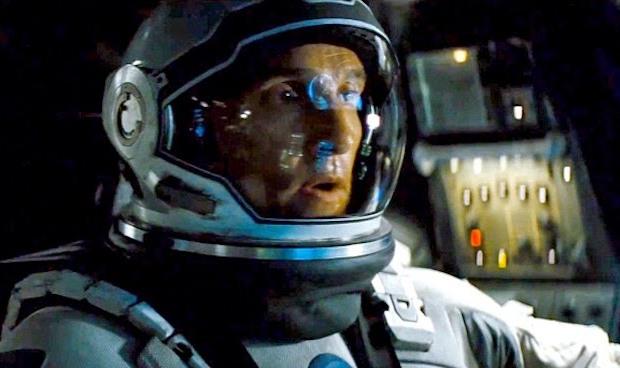
Matthew McConaughey plays Cooper, a pilot turned corn farmer in Earth’s last desperate attempt to continue to feed itself. Humanity is indeed on the brink as blight kills off crops, much like the great potato famine. It is clear that the situation is not going to improve and so an undercover NASA program is tasked to find a way of preserving the human race.

Their solution is to find a new world to colonize. Sounds simple enough, right? Wrong. The nearest habitable worlds are light years away and any efforts to find them are futile simply because of the amount of time it would take. Interstellar had a whole team of astrophysicists figure out how it could be done and then used their calculations to generate the imagery in the film, cool eh?

In Interstellar, there is a singularity located conveniently within our solar system that leads to a different system with several potential habitable worlds. However, due to a bunch of theory of relativity issues, any landfall the explorers make results in epic time loss for those on earth and also anyone who remains on the ship. This results in a very fast paced film as Cooper fights for every second lost in order to reunite with his daughter.

It’s the last third of the film that gets a little screwy. The explorers find themselves in a hopeless situation. There is no way to return important data back to earth for NASA’s colony ship to be able to break free from the surface (another plot strand…) and there is no way for the explorers to survive on the current alien world. They have to decide if they are going to sacrifice themselves to save humanity or save themselves but doom civilization.

interstellar-anne-hathaway

The only way to get the needed data back is to send a probe into the black hole. Cooper and Amelia (played by Anne Hathaway) must separate to give the greatest chance at success.  Amelia’s ship has colonizing equipment to set up another home world and can ensure the survival of the species should the worst outcome happen, so her success is critical. Cooper takes the other part of the ship and heads into the blackhole.

He ends in a time bent fifth dimentional tesseract that enables him to pass on the needed information to NASA. I said it got trippy –  this is the epicenter of trippy here and why I reference Space Odyssey.  Turns out that all the strange phenomenon that they had seen in the beginning of the film was actually Cooper in the fifth dimension trying to communicate with his daughter in the past.

Do I recommend Interstellar? Yes, with caution. This is a film meant for people who love to think in an abstract and twisted way. Those who just like a good story that doesn’t demand much of the watcher will find themselves lost and confused quickly. If you like time travel paradoxes, you’ll like it. If you don’t, then I wouldn’t recommend it.

All images are used here under Fair Use for discussion, review, and educational commentary. They belong to their respective copyright owners.

Doctor Who – Farewell to David Tennant

doctor-who-more-smith-tennant-570x294

As I have recently revealed, I have started watching the ever famous Doctor Who. Although I would love to take in whole seasons in single sittings, life has a way of keeping things in check.  I just finished the fourth season and watched the passing of the torch from David Tennant to Matt Smith in the bittersweet episode “The End of Time.”

You can’t help but fall in love with the tenth Doctor. He’s witty, vibrant, intense, deep, and a touch unstable there at the end. All of the Doctors before him share many of these traits but the Tenth deserves the title of the ultimate Doctor, the one who by his brilliance, defines the rest. He had a flair for the dramatic paired with moments of tenderness and deep felt caring that endeared him to everyone around him.

It will be hard to accept Matt Smith as the doctor, at least at first.  Although I expect it to be about the same as when Christopher Eccleston regenerated to David Tennant. There will be that awkward period where it just doesn’t feel right for anyone else to step into the previous doctor’s shoes. No one likes change, and this is no exception.

Here’s to the next series, I’m looking forward to more adventure, thrills, goofy aliens, and all that space timey-wimey stuff. And Amy Pond, I hear she’s awesome.

All images are used here under Fair Use for discussion, review, and educational commentary. They belong to their respective copyright owners.