Phoenix McDonald is a fantasy author, publisher, and advocate for queer and disabled representation in literature. In this interview, Phoenix shares their creative process, inspiration, and challenges in the publishing world—and what they’re working on next.
How do you approach writing and developing your characters and stories?
I am absolutely a “pantser” when it comes to writing. I will get inspiration for a story, and I just start writing. I liken it to telling the story to myself, because often a twist or sudden incident will come as a surprise to me, just as it will to a reader.
When it comes to world building, I take that initial idea and expand it with all the richness and uniqueness in a fantasy world that I want to see in another world. Right down to the food, I want my worlds to be as original as possible.
What inspired you to write A Discovery of Talents?
My grandson was born in July of 2018, when I was still living in Wisconsin, and my son was living in Portland. I flew out to visit several times a year. During one of those visits, we were talking about if I were to write a children’s book, what it might be about.
My younger child, who is nonbinary, is married to a man who is an artist. His art is dark and sometimes frightening. I thought about a child having a nightmare and based that nightmare on that scary art. As I developed that in my mind, I realized it would be too frightening for a younger children’s story, and decided it would work better as a YA fantasy, which is great, since I have been a YA fantasy fan for a long time.
I knew that if I were going to write this book, I wanted the main character to be disabled, because there aren’t very many stories with disabled characters in them, much less the main character. I wanted to show disabled people that we could be the main character, the hero, the one who has the fantasy adventure and develops the power and has the romance.
How have your identity and lived experiences influenced your storytelling?
Being disabled was always going to be a part of the story, as I explained in the previous question. Being a transgenderman, that’s a more complex part of the story. Before moving to Portland, I was living a very closeted life, and had been for a very long time. I was able to start emerging from that darkness here, first by coming out as nonbinary, and then with a lot of work and therapy, finally coming out as a transgender man.
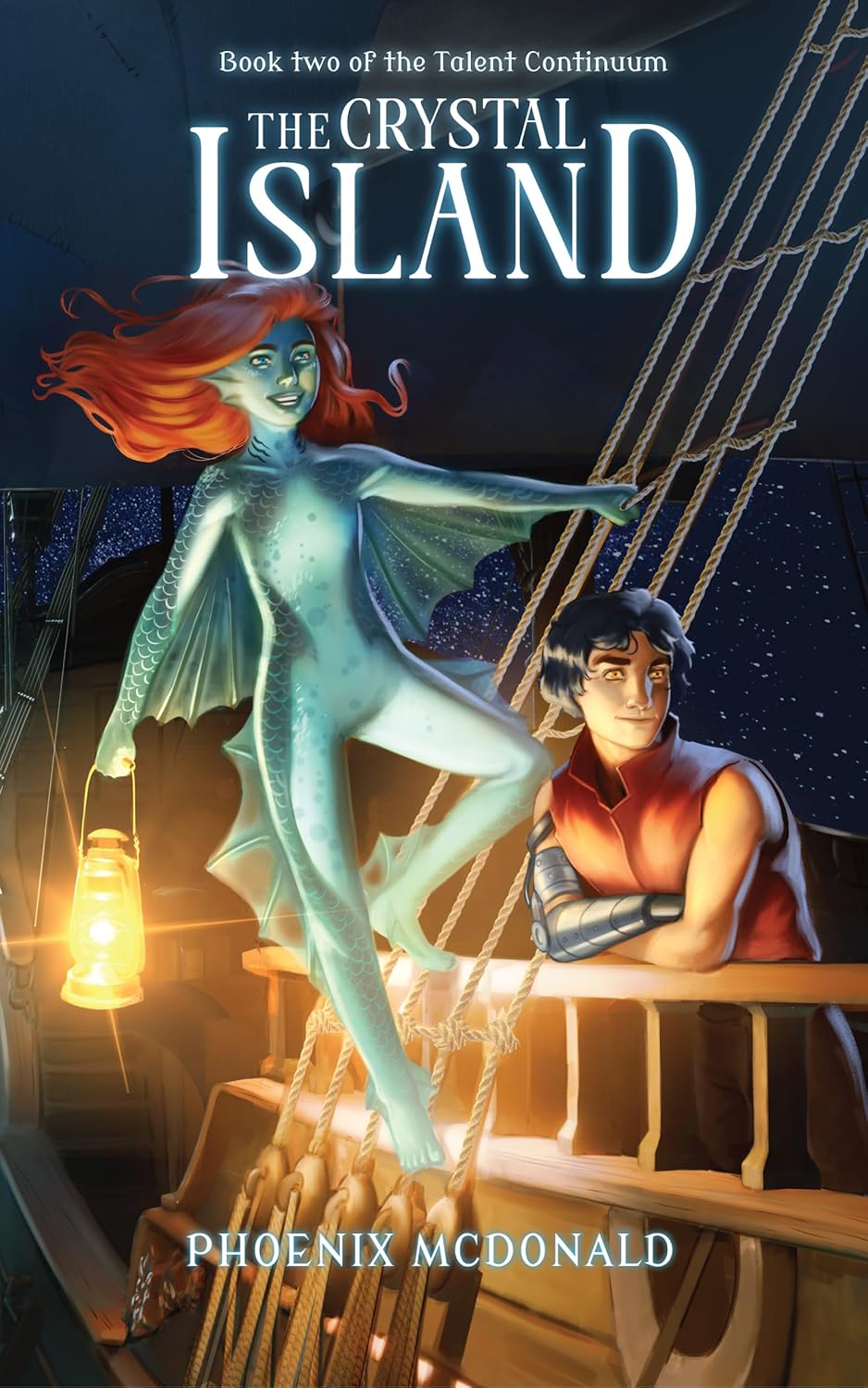
The steps are very visible in these books (The Crystal Island, the second book in the series, just released May 9). A Discovery of Talents is my “baby steps” book, because as I learned more about myself, I wrote about the nonbinary community in the book, and the other communities as well, and their different ways of expressing not just gender, but sexuality as well.
That’s going to be a common theme as my writing continues, because I want to continue to make representation for disability and the queer community a big part of the stories I tell.
What publishing challenges have you faced, and how did you handle them?
Oof! I had a small press that was going to publish my book, and even gave me a three-book contract, including publishing in ebook and physical forms, and audiobook. I learned after the fact that they were using publishing my book and some other authors as a means to use their press to publish their family members’ books. When they tried to break the contracts they had with me, I needed a lawyer to get the rights to my book back.
I’m very glad I did, for more than one reason. I know now that my book wasn’t ready for publishing. I’ve rewritten it since then, and I hired a professional editor to work on it with me. That press didn’t have it professionally edited, and it definitely needed that. Unfortunately, they’re out of business now, which means the authors they did publish, their books are out of print.
Then when I did start to query, I got rejection after rejection from agents and publishers who claimed to want to publish marginalized authors, including disabled and LGBTQ writers. It was discouraging, so I decided that I would become a publisher myself, but in an honest way.
I’m an LLC, Real Phoenix Rises Publishing, and I’m starting off with my own books, openly. I’m hoping to be able to make enough at some point to be able to start accepting submissions from other authors. I want to actually publish books written by other marginalized authors; that’s my primary goal.
How have readers responded to your work?
Almost everyone who has read my book has told me they’ve really enjoyed it and especially people who are disabled or LGBTQIA. I’ve had a couple of veterans tell me how much it meant to them just to see a character on the cover with a prosthetic, which made me feel really good. That’s been my goal from the beginning.
What advice would you give to other writers starting out?
Just keep writing, and keep reading. I’ve never had any kind of formal writing training. While I do have a college degree, it’s in Management for Health Care! Everything I learned about writing, I learned by reading other people’s books.
If your dream is to be a writer, then write. Start small, write some short stories, and submit to anthologies or literary magazines. Many of them will offer feedback, and that can be invaluable. There are quite a few authors now who are offering writing mentorships or writing courses.
What hobbies or interests fuel your creativity?
I play Magic the Gathering at least once a week. It’s a fun card game, but there’s a lot of storytelling behind the characters and the actions in the game too. I’m a huge Marvel fan, and Star Trek and Star Wars. Lord of the Rings is an influence, so as you can imagine, the movies are one of my favorite places.
I also read every day, mostly indie writers, because it’s so important to support our fellow indie writers, and I truly believe that the best writing is coming from the indie community.
Which authors or books have influenced your work the most?
Anne McCaffrey was probably one of my very first fantasy influences, and why I fell in love with dragons. She was a true pioneer as a woman writer in the field of sci fi and fantasy, and while she had some issues with consent at the start that she learned from and fixed, she was writing about homosexuality before many others were.
Maggie Stiefvater is a damn fine YA author. Her book The Scorpio Races is my absolute favorite book I’ve ever read. I refer back to The Wolves of Mercy Falls series when it comes to starting out in YA, and The Raven Cycle and The Dreamer Trilogy when it comes to shifting toward more coming of age and grown up writing in the field.
Patrick Ness is another major influence, who has written a lot of LGBTQIA books.
What are you writing next?
I need to finish The Talent Continuum, and I will do that this year, but I got sidetracked by a photograph! A friend of mine was hiking and took a very interesting picture he shared. At first I thought it just gave me a short story idea, but it turns out it’s going to be a book. It’s a Cryptid story—and since I live in the PNW, it’s probably not too hard to figure out which one!
A heartfelt thank you to Phoenix McDonald for sharing their time, insights, and deeply personal journey with us. Your passion for inclusive storytelling and commitment to uplifting marginalized voices is not only inspiring—it’s essential. We can’t wait to see where your writing takes us next.
If you enjoyed this interview and would like to see more indie authors featured, drop us a comment or message with your suggestions. We love discovering new voices and celebrating the incredible talent in the indie writing community!
Find Phoenix’s Books on Amazon here
Find Phoenix on Social Media here:
Phoenix’s website: https://www.therealphoenixrises.com/




 Jodi L. Milner, Author